Missing teeth changes more than your smile. They affect how you eat, how you speak, and – over time – how your jawbone holds its shape. If you’ve been researching tooth replacement options and keep coming back to dental implants, you’re probably wondering whether they’re worth the investment, what the process actually looks like, and whether you’re a good candidate.
I get these questions from patients every week. As an oral surgeon who places implants regularly, I want to give you an honest picture of what dental implant treatment involves – the benefits, the realistic risks, the recovery timeline, and what separates a good outcome from a great one. This guide covers everything you need to know to make an informed decision.
What Are Dental Implants?
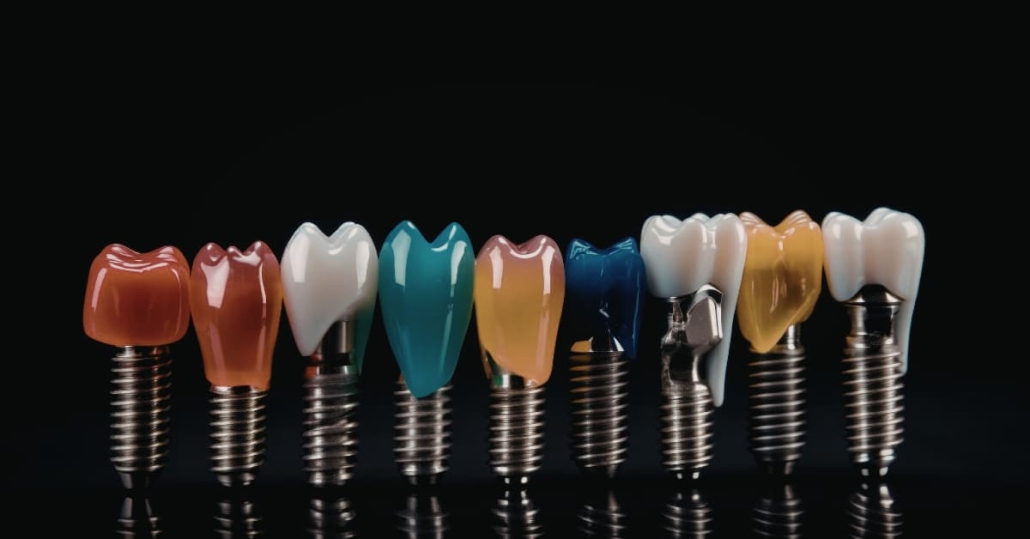
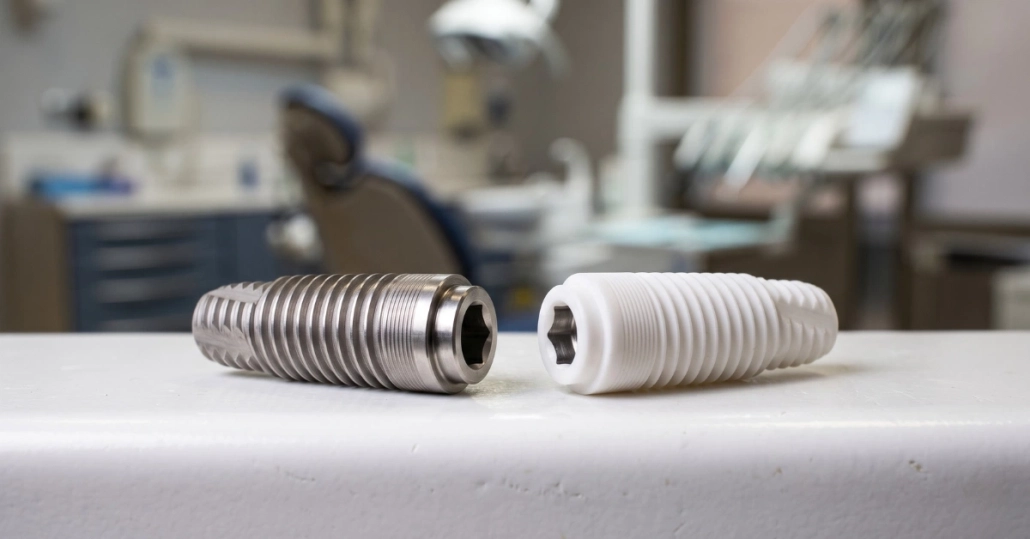
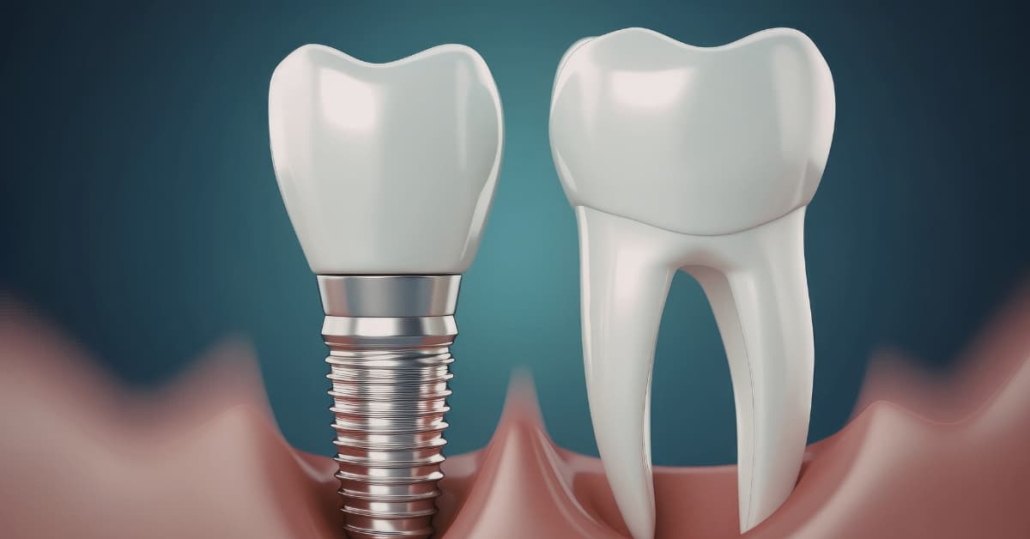
A dental implant is a small titanium post surgically placed into your jawbone where a tooth root used to be. Over several months, the implant fuses with the surrounding bone through a process called osseointegration. Once that bond is established, a custom-made crown is attached to the implant – giving you a replacement tooth that looks, feels, and functions like a natural one.
The complete implant structure has three components:
- The implant post – the titanium fixture that anchors into the jawbone and serves as the artificial root
- The abutment – a connector piece that attaches to the top of the implant post and supports the crown
- The crown – the visible tooth-shaped restoration made to match your surrounding teeth in color and shape
Implants can replace a single tooth, multiple teeth, or serve as anchors for full-arch restorations like Stabili-teeth® – a system designed to support an entire arch of teeth on a fixed set of implants. The underlying principle is the same regardless of how many teeth you’re replacing: a stable foundation in the bone creates results that removable options simply can’t replicate.
Who Is a Candidate for Dental Implants?
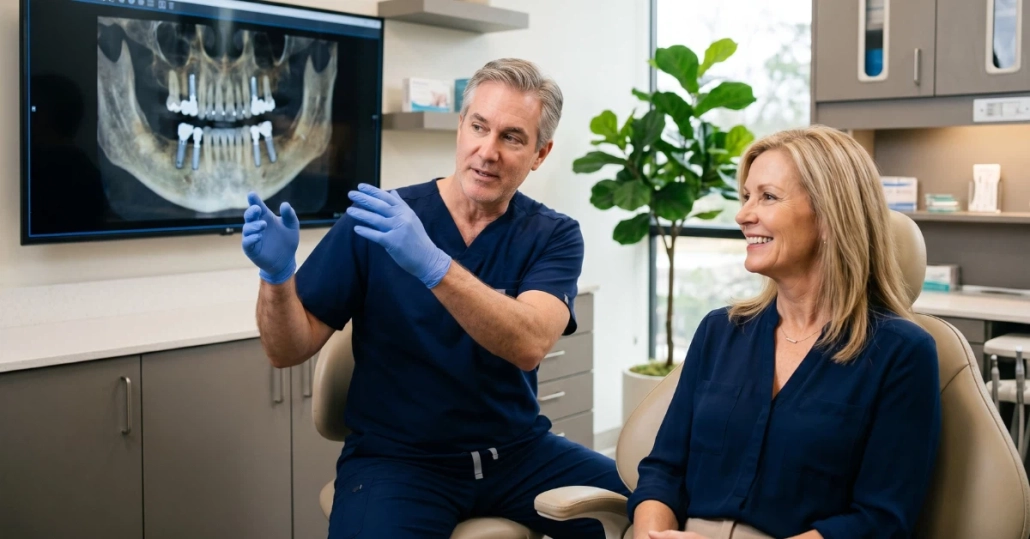
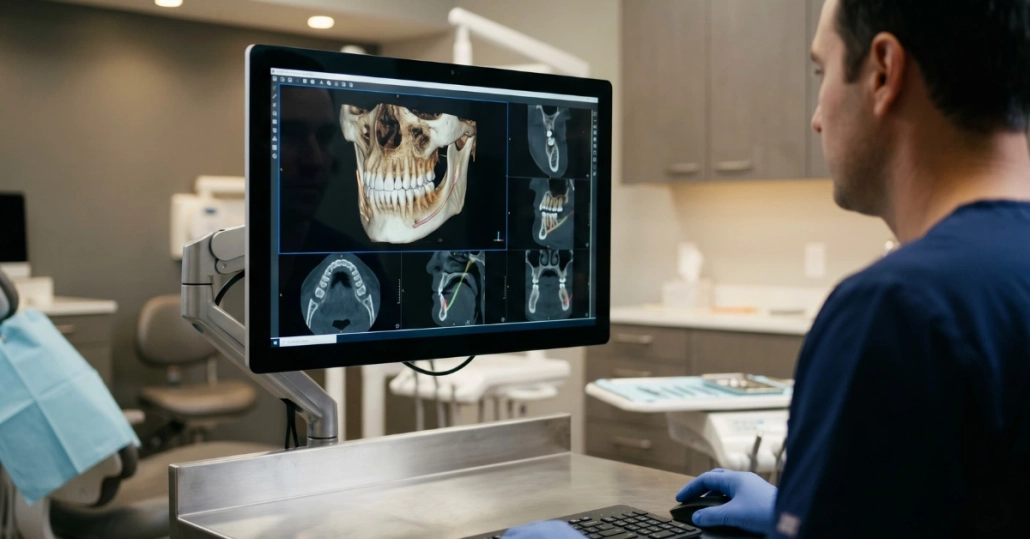
Most adults in good general health are candidates for implants, but a thorough evaluation is essential before any treatment plan is finalized. At Optima Dental Surgery Center, we use 3D cone beam imaging during your consultation so we can assess your bone structure, nerve positions, and anatomy with a high degree of detail – not just X-rays.
Factors we evaluate during the candidacy assessment include:
- Bone density and volume – adequate bone must be present to anchor the implant securely; if bone loss has occurred, grafting may be recommended before or during implant placement
- Gum health – active periodontal disease needs to be addressed prior to implant surgery, since the same bacterial environment that damages natural teeth can affect implant stability
- Overall health history – certain medical conditions and medications can affect healing; we review your full health picture to plan treatment safely
- Smoking status – smoking is associated with higher rates of implant complications and is an important conversation to have before moving forward
- Bite and jaw function – how your teeth come together affects the forces placed on implants over time
Age is rarely a barrier for adults. Many of our patients are in their 50s, 60s, 70s, 80s and we have even had as high as 99 years – and they’re excellent candidates for implants. The more meaningful question is bone quality and overall health, not the number on your birthday cake.
The Dental Implant Process: A Realistic Timeline
One of the biggest sources of confusion I see is around how long implant treatment takes. The honest answer is that it varies – but understanding the stages helps set realistic expectations.
Consultation and imaging – Your first appointment involves a full evaluation, 3D imaging, and a detailed review of your treatment options. This is where we look at whether bone grafting is needed and outline a realistic timeline specific to your situation.
Any preparatory procedures – If you need extractions, bone grafting, or periodontal treatment, those happen before implant placement. Bone grafts typically require three to six months of healing before the implant can be placed, though this varies by case.
Implant placement surgery – The implant post is placed into the jawbone under local anesthesia. Most patients are surprised by how manageable the procedure feels. You’ll go home the same day with post-operative instructions and any needed prescriptions.
Osseointegration – This healing phase, during which the implant fuses with the bone, generally takes three to six months. You’ll have a temporary restoration during this period so you’re not left without a tooth.
Crown placement – Once osseointegration is confirmed, your custom crown is attached. This is the final step, and most patients find the result worth the wait.
For full-arch cases using systems like Stabili-teeth®, the timeline and number of procedures can differ significantly. Some patients qualify for same-day tooth extraction and implant placement under one surgical appointment, while others require a staged approach. We won’t know which path makes sense until we’ve reviewed your imaging.
Benefits of Dental Implants vs. Other Tooth Replacement Options
Patients often come to us after trying dentures or having a bridge placed elsewhere. Understanding why implants are frequently recommended – and where they have clear advantages – helps frame the decision honestly.
- Bone preservation – when a tooth root is missing, the jawbone beneath it gradually resorbs. An implant post stimulates the bone the way a natural root does, which can help preserve jaw structure over time. Dentures and bridges do not provide this benefit.
- Stability and function – implants are fixed in bone and do not move. Patients can typically eat a wider range of foods and speak without the adjustments or adhesives that come with removable options.
- No impact on adjacent teeth – a traditional bridge requires shaping down the teeth on either side of the gap to support the restoration. An implant stands independently without altering neighboring teeth.
- Long-term durability – with proper care and maintenance, implants can be a long-lasting solution. The implant post itself rarely needs replacement; the crown may need replacement over many years with normal use.
- Natural appearance – crowns are crafted to match surrounding teeth in shape and shade, making implants visually indistinguishable from natural teeth in most cases.
That said, dental implants are not the right solution for every patient in every situation. The candidacy factors covered above, combined with your individual goals and budget, shape which path makes the most sense.
Risks and Honest Limitations
Any surgical procedure carries risk, and implant dentistry is no exception. I’d rather give you a clear picture here than let you be surprised later.
Potential complications include:
- Implant failure – in a small percentage of cases, the implant does not integrate properly with the bone. Smoking, certain systemic conditions, and infection are among the factors most commonly associated with failure.
- Infection – as with any oral surgery, infection is possible. Following post-operative instructions carefully reduces this risk considerably.
- Nerve or sinus involvement – proper pre-surgical imaging significantly reduces the likelihood of these complications, but they are a known risk in implant surgery, particularly in certain areas of the jaw.
- Peri-implantitis – this is a form of gum and bone inflammation around an implant, similar in concept to periodontal disease. It can develop years after placement if oral hygiene is not maintained and regular monitoring is skipped.
The overall success rates for dental implants are well-documented and generally favorable – but those rates are associated with proper patient selection, sound surgical technique, and consistent maintenance. Outcomes vary by individual, and no ethical provider should guarantee a specific result.
Dental Implant Maintenance: Protecting Your Investment
Implants do not get cavities, but the tissue around them absolutely requires care. Peri-implantitis is largely preventable with consistent hygiene habits and regular monitoring appointments.
Daily maintenance for implants includes:
- Brushing twice daily with a soft-bristle brush, paying careful attention to the gumline around each implant
- Flossing or using interdental brushes around implant crowns – standard floss works for single implants, while full-arch restorations may require water flossers or specialized tools
- Avoiding habits that stress implants – grinding, chewing ice, or using teeth as tools places excessive force on crowns and can shorten their lifespan
Beyond daily care, professional cleanings and implant monitoring appointments are non-negotiable. We check implant stability, assess tissue health, and look at the bone level around each implant on a regular schedule. Catching early signs of peri-implantitis allows us to intervene before significant bone loss occurs.
Patients who treat their implants like they do natural teeth – with consistent home care and regular professional visits – tend to have the best long-term outcomes. This isn’t passive maintenance. It’s an active investment in protecting the work.
What to Expect at Optima Dental Surgery Center
We serve patients throughout Austin, Round Rock, and Temple. Our approach to implant consultations starts with 3D imaging so that every recommendation we make is grounded in your actual anatomy – not a general protocol applied to everyone.
We work with multiple financing partners because we understand that transparent cost information matters as much as clinical information. Before you commit to treatment, you’ll know what the plan involves, what it costs, and what the timeline looks like. We don’t believe vague pricing serves anyone.
Our consultation process is designed to answer questions, not generate pressure. If implants are right for you, the imaging and evaluation will support that. If a different path makes more sense for your situation, we’ll tell you that too.
Is a Dental Implants Guide Enough to Make Your Decision?
Reading about dental implants is a useful starting point. But the decision about whether implants are right for you – and which type, timeline, and approach fits your situation – can only be answered with a clinical evaluation specific to you.
If you’re in the Austin, Round Rock, or Temple area and want to move from research to an actual picture of your options, scheduling a consultation is the clearest next step. Bring your questions. We’ll bring the imaging and the answers.
Frequently Asked Questions About Dental Implants
How long do dental implants last?
The titanium implant post can last decades with proper care and regular monitoring. The crown may need replacement after ten to fifteen or more years due to normal wear. Outcomes vary based on oral hygiene, health history, and bite function.
Are dental implants painful?
The procedure is performed under local anesthesia, so you should not feel pain during surgery. Post-operative soreness and swelling in the following days are normal and manageable with prescribed or over-the-counter pain relief. Most patients find recovery more comfortable than expected.
How much do dental implants cost?
Cost varies based on the number of teeth replaced, whether bone grafting is needed, and the type of restoration. A single implant and a full-arch solution like Stabili-teeth® represent very different investment levels. At Optima, we provide transparent cost breakdowns after your consultation and work with multiple financing partners.
What is the difference between dental implants and dentures?
Dentures are removable and rest on the gums. Dental implants are fixed into the jawbone, providing a stable foundation that does not move. Implants also stimulate the jawbone the way a natural root does, which can help preserve bone volume over time – something dentures cannot do.
Can you get dental implants if you have bone loss?
Bone loss does not automatically disqualify you. In many cases, bone grafting can restore enough volume to support an implant. A 3D cone beam scan is needed to assess what’s present and whether grafting is required – standard X-rays do not capture enough detail for accurate implant planning.
How long does the dental implant process take?
Timeline ranges from a few months to over a year depending on your situation. Patients who need bone grafting first typically add four to six months before implant placement. Those with adequate bone may reach final crown placement within three to six months of surgery.
Are dental implants covered by insurance?
Coverage varies widely. Many dental plans do not cover implants or offer only partial benefits. Medical insurance may apply if tooth loss resulted from injury or a medical condition. Contact your insurance provider directly – our team can assist with documentation to support applicable claims.
This article is intended for educational purposes only and does not constitute medical advice. Individual treatment outcomes vary. Consult with a qualified dental professional to determine whether dental implant treatment is appropriate for your specific situation.