If you live in Waco, Temple, the Hill Country or Killeen, the closest dental implant conversation usually starts at a general dentist’s office – not because that office is right for you, but because it’s the one already on your street. The real question most patients never get a straight answer to is when that convenience actually costs them something, and when driving an hour or more to see a specialist changes the outcome enough to justify the trip. For most people considering dental implants, the honest answer depends less on the miles on the odometer and more on what your specific case requires.
I’m Dr. Kris Owens, lead implant surgeon at Optima Dental Surgery Center in Round Rock. I see patients who drive in from well outside Austin every week, and the pattern is consistent – the drive matters far less than most people assume, because almost none of it happens on the surgical day itself.
What Actually Changes When You Travel for Dental Implants
The instinct is to picture implant treatment as a string of repeat trips – consultation, imaging, surgery, adjustment, adjustment again. In practice, most of that gets condensed into a small number of visits, and the visit that actually requires the specialist’s chair is the surgical day. Everything else – initial questions, financing conversations, even some follow-up checks – can often happen by phone, video, or through a referring general dentist closer to home.
The Typical Visit Pattern for a Full-Arch or Complex Case
- Consultation and imaging – A CT scan and treatment plan review, usually one visit, sometimes combinable with the surgical consult.
- Surgical day – The one visit where being in a specialist’s chair matters most, this is where sedation, surgical guides, and grafting (if needed) happen.
- Early healing check – A short visit, often within one to two weeks, to confirm healing is on track.
- Restoration fitting – Once the implant has integrated with the bone, a visit to place or adjust the final teeth.
- Long-term maintenance – Routine checkups, which can often be shared with a local general dentist once the implant is stable.
That’s the piece most patients don’t calculate ahead of time. If you’re comparing a 90-minute drive against a 10-minute one, you’re not comparing five round trips – you’re comparing one or two that truly require the specialist, plus routine care that can often stay local.
When a General Dentist Near You Is the Right Call
Not every implant case needs a surgery center, and it isn’t honest to suggest otherwise. Many general dentists place single-tooth implants competently every day, particularly in simple cases with healthy bone and no complicating history. If that describes your situation, the closer office may be the more practical choice, and there’s nothing wrong with choosing convenience when the case doesn’t call for more.
Where the calculation changes is case complexity – and this is the part worth being clear-eyed about before you decide.
Cases Often Suited to a Local General Dentist
|
Cases Where a Specialist Visit Is Usually Worth the Drive
|
Signs Your Case May Be More Complex Than It Looks
Patients often assume their situation is simple because it feels that way day to day – a loose tooth, a gap that’s been there for years, a denture that no longer fits well. Complexity isn’t always obvious from the outside, though, and a few history details tend to shift a case from the “either provider works” category into the “specialist visit is worth it” category.
Bone loss is the biggest one. If you’ve been missing a tooth for several years, or if you’ve worn a partial denture for a long time, the jawbone in that area has likely started to resorb, which can mean grafting is needed before an implant can be placed at all. A history of periodontal disease points the same direction, since active or past gum disease affects the bone and tissue an implant depends on. A previous implant that failed, loosened, or was removed is another signal worth taking seriously – repeating the same approach without understanding why it failed the first time tends to lead to the same result.
Medical history matters too. Patients on blood thinners, with uncontrolled diabetes, or with a history of radiation to the jaw often need more careful planning and, in some cases, sedation options that aren’t available in every general practice. None of this is meant to be alarming – most patients fall somewhere in the middle, not at either extreme – but it’s worth mentioning these details during a consultation rather than assuming they don’t apply.
The Distance-Versus-Complexity Guide
Here’s a simple way to frame the decision once you know roughly which category your case falls into.
| Case Complexity | Recommended Provider | Is the Drive Usually Worth It? |
|---|---|---|
| Single implant, healthy bone | General dentist or specialist | Optional – local convenience is reasonable |
| Multiple missing teeth, some bone loss | Specialist | Often yes, for the surgical day |
| Full-arch (All-on-4 or All-on-6) | Full-arch implant specialist | Yes – imaging, planning, and sedation depth matter here |
| Previously failed implant | Specialist for re-evaluation | Strongly recommended before repeating the procedure |
The Technology and Training Difference
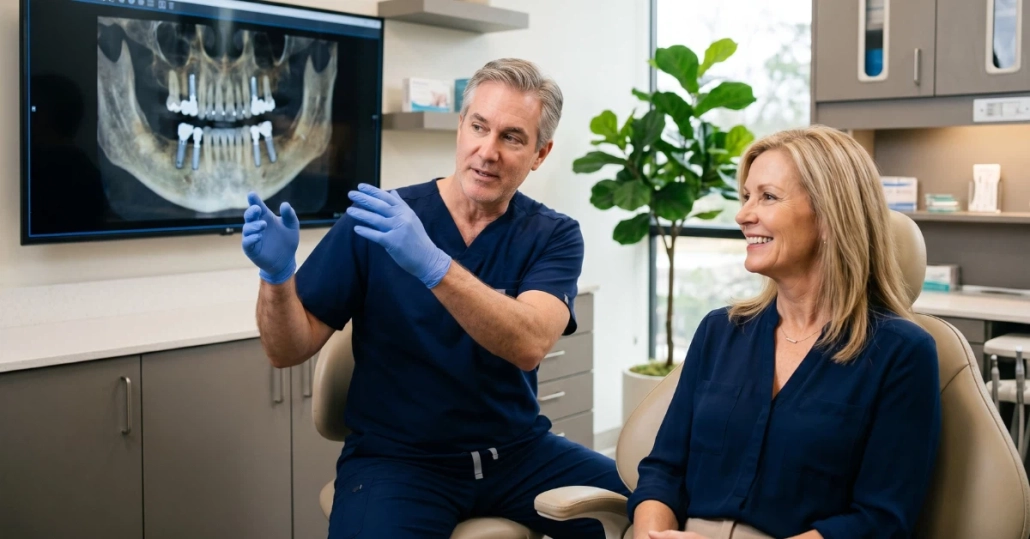
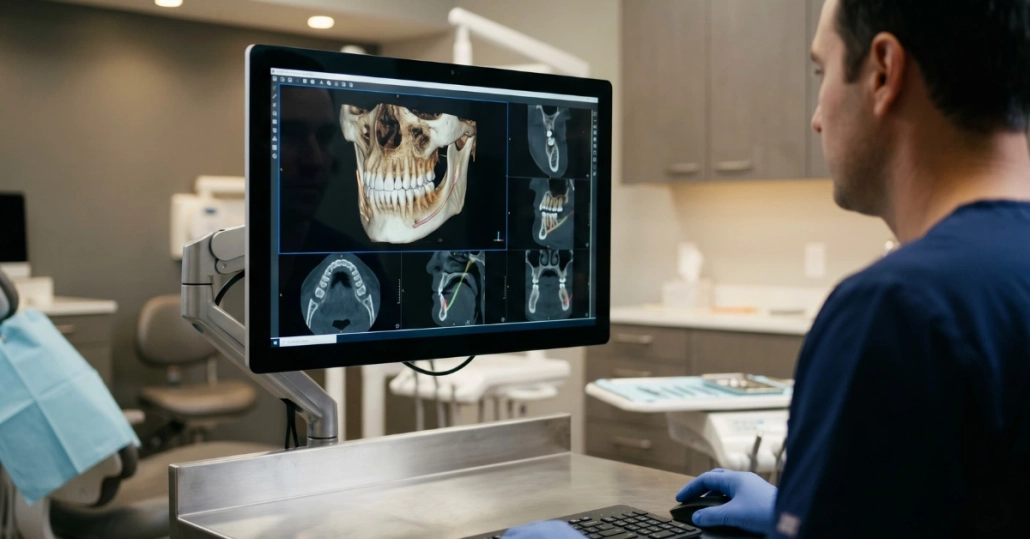
Part of what you’re weighing against the drive is access to tools and training that aren’t standard in every general practice. Surgeons complete additional years specifically focused on the bone, soft tissue, and anesthesia considerations involved in implant placement. In practical terms, that training shows up in three places patients notice most – 3D CT imaging for surgical planning, in-office IV sedation options, and case-planning experience with grafting and full-arch reconstruction.
None of this means a general dentist can’t place a good implant. It means that as a case gets more complex – more bone loss, more missing teeth, more surgical history – the value of that additional training tends to grow, and that’s the honest way to think about whether a longer drive pays for itself.
Notes from Dr. Owens
Patients from Waco, Temple, Marble Falls and Killeen already make the drive to see me for complex full-arch cases and grafting – not because closer options don’t exist, but because they wanted a surgical plan built around 3D imaging before committing to treatment. If your case is simple, I’ll tell you that directly in a consultation. If it isn’t, that’s usually the conversation where the drive starts to make sense.
What About Cost and Financing?
Distance affects your time, not necessarily your bill. Specialist pricing is often comparable to – and sometimes more predictable than – a general practice once grafting, sedation, or a failed-implant correction is factored into the total. Optima works with CareCredit, Proceed and Cherry financing to spread the cost of full-arch and complex cases over time, which is worth asking about regardless of where you ultimately choose to be treated. You can review financing options and typical cost ranges on our dental implant financing page.
If You Decide the Drive Is Worth It
Optima serves a 150-mile radius from Round Rock, which already covers Austin, Cedar Park, Bee Cave, Pflugerville, and Lakeway, along with patients traveling in from Waco, Temple, and Killeen for full-arch and complex cases. A few things make the trip more efficient once you’ve decided it’s the right move.
- Ask whether your first visit can combine the consultation and 3D imaging into a single appointment.
- Bring a list of medications and any prior dental records, especially imaging, from your general dentist.
- Review our dental implants checklist beforehand so you know what to expect and what to bring.
- If your case involves multiple missing teeth, ask specifically about the All-on-4 same-day process, which is built around minimizing the number of surgical trips required.
For a closer look at what the consultation itself involves, our dental implant consultation guide walks through what to expect at the first visit, whether that visit is ten minutes from home or ninety.
Not Sure Which Category Your Case Falls Into?
A free consultation with Dr. Owens will tell you plainly whether your case needs a specialist visit or whether a closer option makes sense – no pressure either way.
Frequently Asked Questions
Is it better to go to a surgeon or a general dentist for implants?
It depends on the case. A general dentist is often appropriate for a single implant with healthy surrounding bone. An experienced surgeon or periodontist is generally the better fit for full-arch cases, bone grafting, sedation needs, or a previously failed implant.
Can any dentist do dental implants, or do I need a specialist?
General dentists can legally place implants and many do so successfully for simple cases. Specialists complete additional surgical training that becomes more valuable as a case gets more complex.
How many follow-up visits are required after dental implant surgery?
Most patients need an early healing check within one to two weeks, followed by a restoration visit once the implant has integrated with the bone. Long-term maintenance checkups can often be shared with a local general dentist once the implant is stable.
What are the risks of getting dental implants from a general dentist?
For simple, single-tooth cases with healthy bone, risk levels are generally comparable between general dentists and specialists. Risk tends to rise with case complexity – bone loss, multiple missing teeth, or a prior failed implant – situations where additional surgical training and imaging matter more.
Is it worth driving to Round Rock or Austin for dental implants if I live in Waco, Temple, Killeen or the Hill Country?
For simple single-implant cases, a local provider may be entirely reasonable. For full-arch treatment, grafting, or a previously failed implant, many patients from these areas find that one or two specialist visits are worth the drive, since most of the remaining care can be coordinated closer to home.
How far do patients typically travel to see a dental implant specialist?
This varies widely by region. Optima’s Round Rock location serves a 150-mile radius, with patients regularly traveling from Austin, Cedar Park, Bee Cave, Pflugerville, Lakeway, and further out from Waco, Temple, the Hill Country and Killeen for complex or full-arch cases.
What should I bring to a long-distance implant consultation?
Bring a current medication list, any recent dental X-rays or imaging from your general dentist, and a clear description of your goals for treatment. Confirming ahead of time whether imaging can be done during the same visit will help you avoid an extra trip.