You're researching full-arch dental implants and every practice seems to recommend something different. One surgeon says All-on-4 is all you need, another insists All-on-6 provides better stability, and a third mentions All-on-8 for maximum support. Central Texas patients tell us they feel overwhelmed by conflicting advice, and most don't understand what actually separates these approaches beyond the obvious number of implants.
Direct Answer · All-on-4 vs All-on-6 Implants
All-on-4 uses four implants per arch and works well when anterior bone is solid, costing $20,000 to $28,000 per arch in Austin. The six-implant version adds two posts for better force distribution and redundancy, running $23,000 to $32,000 per arch. Your CT scan decides which approach fits your bone anatomy and bite forces, since both systems serve different clinical situations well.
Quick Answer · At a Glance (2026 Central Texas)
- All-on-4 fits patients with moderate bone density and adequate anterior support. Cost $20,000 to $28,000 per arch.
- All-on-6 fits compromised or uneven bone patterns and patients who want maximum redundancy. Cost $23,000 to $32,000 per arch.
- Both systems can deliver durable outcomes when matched to the right anatomy. Your CT scan guides the choice based on bone density patterns, anatomy, and bite forces.
- Both deliver permanent, fixed teeth with 95%+ success rates and similar 3 to 6 month recovery timelines.
- The $3,000 to $5,000 cost difference buys additional support and redundancy. Clinically meaningful for some patients, unnecessary for others.
- Recovery is nearly identical. All-on-6 adds 30 to 60 minutes of surgery time, but home recovery follows the same protocol.
This guide breaks down the real differences Austin, Round Rock, and Temple patients need to understand. You'll see how each system distributes force, which bone requirements determine candidacy, exact 2026 cost differences in Central Texas, and how CT scan analysis reveals which approach fits your case. If you're comparing tooth replacement options for the first time or reviewing the full dental implants guide, understanding how these two full-arch systems differ in practice will help you ask the right questions before your consultation.
Both Systems
With Proper Care
Restored
All-on-4 vs All-on-6 Dental Implants Comparison Table
Before getting into the clinical reasoning behind each system, here's a direct comparison of the features that affect your decision most. This table reflects current 2026 Austin-area pricing and standard surgical protocols used at Optima Dental Surgery Center.
Scroll to compare
| Feature | All-on-44 implants per arch | All-on-66 implants per arch |
|---|---|---|
| Implants per arch | 4 | 6 |
| Posterior angulation | 30 to 45 degrees | Less extreme, more evenly distributed |
| Bone grafting needed | Often not required | Sometimes required in additional sites |
| Surgery time per arch | 2 to 3 hours | 2.5 to 4 hours |
| Cost per arch (Austin, TX 2026) | $20,000 to $28,000 | $23,000 to $32,000 |
| Recovery timeline | 3 to 6 months | 3 to 6 months |
| Best candidates | Moderate bone loss, good anterior density | Compromised or uneven bone, heavy bite forces |
| Clinical success rate | 95%+ | 95%+ |
| Cantilever stress | Higher, longer spans between anchor points | Lower, shorter spans with more support |
| Redundancy if one implant fails | Lower margin | Higher, 5 remaining posts still support restoration |
All-on-4 vs All-on-6: What the Numbers Actually Mean
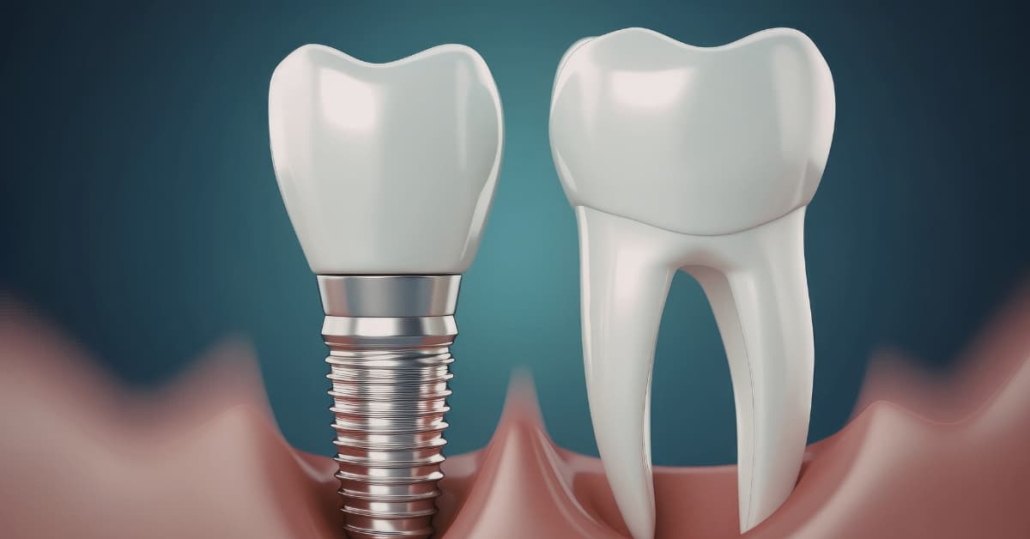
All-on-4 uses four dental implants per arch. Two straight posts go in the front of your jaw where bone is typically denser, plus two angled implants positioned in the back to engage posterior bone while avoiding sinus cavities and nerve pathways. All-on-6 adds two more implants, usually placed between the front and back posts, creating six total anchor points for your prosthetic teeth.
The number matters because each implant serves as a foundation point distributing chewing forces into your jawbone. Four implants create a quadrilateral support structure. Six implants create a more complex support pattern with additional stabilization in the mid-arch region. Think of it like building supports for a bridge. Four well-placed pillars can hold the structure, but six pillars distribute weight more evenly and provide redundancy if one support experiences problems.
Both approaches deliver fixed teeth that stay in your mouth permanently, unlike removable dentures. Both use the same surgical principles, including titanium posts that fuse with bone over several months, temporary teeth during healing, and final prosthetics attached once integration completes. The core difference lies in how many implants anchor your restoration and where surgeons position those posts for optimal force distribution.
The angled implant placement in both systems lets surgeons work with available bone instead of requiring extensive bone grafting for dental implants. All-on-4 typically places posterior implants at 30 to 45 degree angles, while All-on-6 may use less extreme angulation because the additional implants provide more anterior-posterior support. This angulation difference affects surgical complexity, healing patterns, and long-term stress distribution on both the implants and the prosthetic restoration.
We've seen confusion about whether more implants automatically mean better outcomes. Six implants provide benefits in specific situations, such as significant bone loss in certain areas, exceptionally heavy bite forces, or patients wanting maximum redundancy. Four implants placed correctly in good bone often provide comparable longevity and function at lower cost and surgical complexity. The full-arch implants complete guide covers how both systems fit within the broader range of full-arch solutions available today.
How All-on-4 and All-on-6 Work Differently
The mechanical differences between All-on-4 and All-on-6 affect everything from surgery duration to how forces transfer through your jaw during chewing. Understanding these distinctions helps you evaluate which system makes sense for your case rather than choosing based on assumptions about "more being better."
A 2023 three-dimensional finite element analysis published in the Journal of Indian Society of Periodontology compared stress distribution between All-on-four and All-on-six treatment concepts under vertical, horizontal, and oblique loading conditions. The researchers found that All-on-six showed more favorable biomechanical behavior, with smaller maximum principal stress values on cortical bone and implants compared to All-on-four across all loading directions (Pandey et al., 2023, PMC10159094). This matters clinically. Lower stress values at the bone-implant interface can reduce long-term fatigue on both the bone and the implant post itself.
Here's how the systems differ in ways that affect Central Texas patients:
- Implant Positioning. All-on-4 places implants at the four corners of your arch, with posterior posts angled backward to reach stable bone. All-on-6 adds two implants in the canine or premolar regions, creating more evenly distributed support across the entire arch length.
- Force Distribution. Four implants create distinct load-bearing zones at the front and back of your arch. Six implants distribute chewing forces more evenly across the entire restoration, which reduces stress concentration on individual implants during function.
- Surgical Access. All-on-4 requires access to four specific anatomical locations. All-on-6 needs adequate bone in six sites, which sometimes means working around anatomical limitations like sinus position, nerve location, or areas of previous bone loss.
- Prosthetic Design. All-on-4 restorations span longer distances between implant supports, requiring specific framework designs to manage cantilever forces. All-on-6 prosthetics use shorter spans between supports, reducing stress on the restoration itself.
- Bone Requirements. All-on-4 works well when you have good bone in the anterior region and at least moderate bone posteriorly where angled implants can engage available support. All-on-6 requires adequate bone in six distinct locations, which may sometimes mean understanding bone grafting procedures before treatment can proceed.
- Surgery Duration. All-on-4 typically takes 2 to 3 hours per arch including implant placement and temporary teeth attachment. All-on-6 adds 30 to 60 minutes for the additional implant sites, plus time for any necessary modifications to surgical protocols.
- Angulation Complexity. All-on-4 relies heavily on carefully controlled posterior implant angulation to avoid anatomical structures while maximizing bone contact. All-on-6 can often use less extreme angles because the additional implants provide support, though this depends on individual anatomy.
- Maintenance Access. Both systems require professional cleaning every 4 to 6 months, but six-implant restorations may offer slightly better access for hygiene around implant sites due to more evenly distributed spacing. The practical difference is minimal for most patients who maintain good home care.
The engineering principles behind both systems are sound. All-on-4 succeeds through strategic implant placement that maximizes available bone contact while minimizing surgical complexity. All-on-6 provides additional support that can be valuable when anatomical challenges exist or when patients want maximum long-term stability despite higher initial investment. Each approach has its own clinical fit. Our team evaluates which one suits your case based on CT scan findings showing your specific bone density patterns, anatomical limitations, and bite force characteristics.
Question 1 of 3
How would you describe your current dental situation?
Question 2 of 3
How would you describe your bite or chewing habits?
Question 3 of 3
What matters most to you when choosing between systems?
This is a starting point only, not a clinical recommendation. Your CT scan is the only accurate way to determine which system fits your specific bone anatomy and functional needs.
Which Austin Patients Need All-on-4 vs All-on-6
The All-on-4 vs All-on-6 decision comes down to your bone anatomy, not arbitrary preferences or what sounds better. CT scan imaging reveals bone density patterns, anatomical structures, and existing pathology that determine which approach provides predictable outcomes for your specific case. Reviewing the full-arch implant candidate eligibility factors before your consultation helps you arrive prepared to discuss your specific situation.
Good anterior bone density, adequate posterior bone for angled implants, minimal to moderate bone loss in the front, and anatomical structures positioned to accommodate two angled posterior implants without complications.
Bone quality is compromised in specific areas but remains adequate in six distinct locations, exceptionally heavy bite forces are present, or bone loss patterns mean two additional implants significantly improve force distribution.
Here are the clinical factors that guide our recommendations for Austin-area patients:
- Bone Density Patterns. If CT scans show good density throughout your anterior and mid-arch regions with adequate posterior bone, you may be a candidate for either approach. If density is poor in posterior regions but good anteriorly and in canine areas, All-on-6 may provide better primary stability.
- Previous Bone Loss. Patients who've worn dentures for years often have significant ridge resorption. All-on-4 can work when loss is relatively uniform because angled implants reach deeper bone. All-on-6 becomes preferable when loss is uneven and six implant sites offer better distribution than four would achieve.
- Sinus Position. Low sinus floors limit posterior implant placement in upper arches. All-on-4's angled approach often avoids sinus complications. All-on-6 might require sinus lifts if the mid-arch implants encounter sinus encroachment, though this depends entirely on individual anatomy revealed by CT imaging.
- Bite Force Characteristics. Heavy chewers or people who clench and grind may benefit from the additional support six implants provide. The extra implants distribute stress more evenly, potentially reducing wear on individual posts over decades of function.
- Arch Length and Width. Longer, wider arches sometimes benefit from six-implant support to reduce cantilever stress on posterior prosthetic extensions. Shorter arches often function well with four implants because the distances between supports remain manageable.
- Medical History. Conditions affecting healing, including controlled diabetes, osteoporosis, or history of radiation therapy, may favor All-on-6 because additional implants can provide backup if one fails to integrate properly.
- Budget Considerations. All-on-4 costs $3,000 to $5,000 less per arch than All-on-6 in Central Texas. When both systems would work clinically, some patients choose All-on-4 to reduce investment while still working toward good outcomes.
- Patients Missing All Teeth. If you're currently missing all upper or lower teeth, your bone resorption pattern from long-term tooth loss will heavily influence whether four or six anchor points provide the stability your case requires.
Our clinical team doesn't recommend systems based on what's easier to place or more profitable. The decision follows evidence from your CT scan showing which approach provides stable, long-term support given your specific anatomy. The consultation process involves examining your CT data together. We show you bone density measurements, anatomical structures, and where implants would be positioned for each approach.
All-on-4 vs All-on-6 Dental Implants Cost in Central Texas (2026)
All-on-4 costs $20,000 to $28,000 per arch in the Austin area, while All-on-6 runs $23,000 to $32,000 per arch. The $3,000 to $5,000 difference reflects additional implant hardware, extended surgery time, and more complex prosthetic fabrication. Understanding what drives these costs helps you evaluate whether the added investment in six implants provides meaningful value for your situation.
These ranges include everything from consultation through final restoration. CT scan, surgical procedures, implant posts and abutments, temporary teeth during healing, final prosthetic fabrication, and follow-up visits through the first year. Additional costs can arise from bone grafting if needed, tooth extractions, sinus lifts for upper arch complications, and sedation options beyond local anesthesia.
The $3,000 to $5,000 difference between All-on-4 and All-on-6 breaks down to approximately $800 to $1,200 per additional implant when you factor in surgical time, prosthetic modifications, and follow-up care. That investment buys extra support and redundancy. It's valuable for some patients, unnecessary for others depending on clinical factors we covered in the previous section.
Dental implant financing options in Austin work the same for both approaches. CareCredit, Lending Club, and Alphaeon Credit offer 12 to 24 month interest-free periods for qualified applicants. The monthly payment difference between All-on-4 and All-on-6 typically runs $50 to $100 per month on standard plans, manageable for most patients when the clinical situation justifies six implants over four.
Insurance coverage remains limited for both approaches since full-arch implants are typically classified as cosmetic rather than medically necessary. If you want to review the dental implants checklist before your consultation, it covers what to bring, what to expect, and how to prepare for your financial conversation with our team.
Beyond All-on-4 and All-on-6: All-on-8, Stabili-Teeth™, and Ceramic Implant Alternatives
The All-on-4 vs All-on-6 comparison gets additional dimensions when patients ask about All-on-8 for maximum support, branded Stabili-Teeth™ protocols for specific clinical situations, or ceramic implant alternatives instead of titanium. Understanding where each alternative fits helps clarify why four or six titanium implants handle the vast majority of Central Texas full-arch cases.
All-on-8: When Eight Implants Make Sense
All-on-8 places eight implants per arch, typically in positions that create maximum anterior-posterior spread across the entire jaw. The prosthetic restoration rests on eight anchor points, which provides the lowest possible cantilever force on the bridge and maximum redundancy if any individual implant fails to fully integrate. Surgery time extends to 3 to 5 hours per arch, and cost in the Austin area generally runs $28,000 to $38,000 per arch depending on surgical complexity and prosthetic design.
All-on-8 applies in specific situations:
- Very wide or long arches. Some patients have larger jaw dimensions where eight implants are needed to fully support the prosthetic span without excessive cantilever.
- Exceptionally heavy bite forces. Patients with a history of severe bruxism or jaw muscle hypertrophy may benefit from maximum force distribution across eight points.
- Medical risk factors affecting integration. Conditions that reduce healing predictability may favor eight implants as a buffer against partial integration failure.
- Maximum redundancy preference. Some patients want the highest margin of safety available, and All-on-8 provides that when anatomy supports placement.
For most Central Texas patients we see, All-on-8 is more than necessary. Good bone anatomy, normal bite forces, and standard arch dimensions rarely justify the added surgical complexity and cost beyond what All-on-6 achieves.
Stabili-Teeth™: Optima's Branded Same-Day Protocol
Stabili-Teeth™ is Optima Dental Surgery Center's branded same-day full-arch protocol, designed around immediate-load principles using four or six implants depending on your CT-guided treatment plan. The Stabili-Teeth™ system bundles surgery, temporary teeth fitted same day, and final prosthetic into a defined treatment pathway. Cost typically falls in the $24,000 to $35,000 per arch range, depending on whether four or six implants are used and whether grafting or sedation is needed.
Stabili-Teeth™ functions as a delivery protocol around the All-on-4 or All-on-6 mechanical approach, emphasizing predictable timing, single-visit surgical delivery, and integrated prosthetic planning. Patients comparing the Stabili-Teeth™ full-arch system against generic All-on-4 quotes from other practices are usually comparing protocol, follow-up access, and prosthetic quality more than mechanical implant count.
Ceramic Implants: A Material Alternative
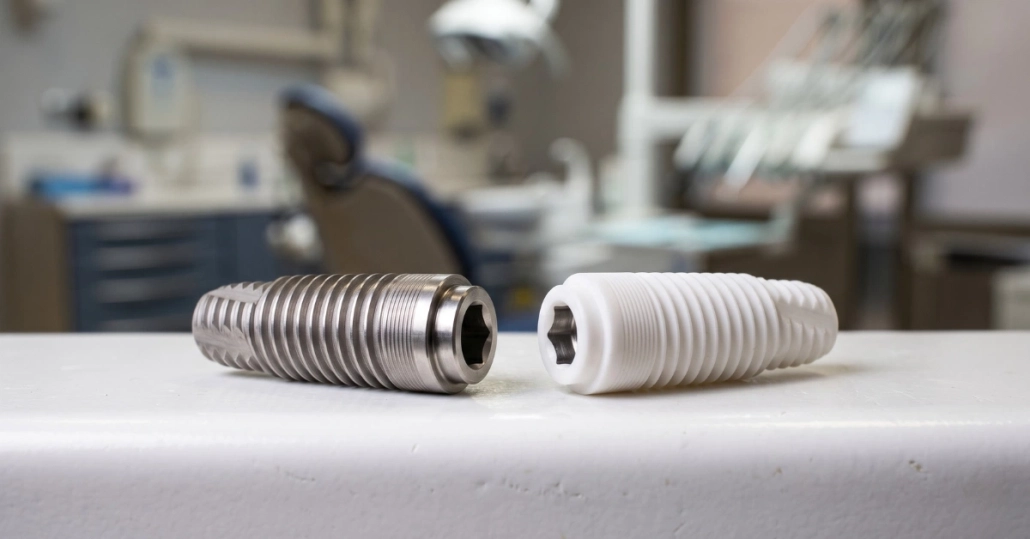
Some patients ask about ceramic dental implants instead of titanium for full-arch reconstruction. Ceramic implants made of zirconia offer a metal-free alternative that some patients prefer for biocompatibility or aesthetic reasons. Ceramic implants are compatible with both All-on-4 and All-on-6 protocols, though candidacy depends on bone density requirements that may differ slightly from titanium placements.
Ceramic implant pricing is typically higher than titanium, with All-on-4 ceramic running approximately $26,000 to $34,000 per arch and All-on-6 ceramic running $30,000 to $40,000 per arch. The trade-offs include longer healing timelines in some cases and a smaller pool of surgeons with ceramic placement experience. We discuss ceramic options during consultation when patients ask about material alternatives.
If you're uncertain which system applies to your situation, reviewing full-arch implant candidate eligibility factors before consultation gives you useful context before we discuss your CT results.
How All-on-4 and All-on-6 Compare to Traditional Dentures
Full-arch dental implants, whether All-on-4 or All-on-6, differ from traditional dentures in ways that go beyond aesthetics. For Central Texas patients currently wearing dentures or considering them as a lower-cost alternative, these differences affect daily function and long-term oral health in meaningful ways. A detailed breakdown is available in the dental implants vs dentures guide, but here's what matters most for this comparison.
- Fixed vs Removable. All-on-4 and All-on-6 restorations are permanently anchored and never come out. Traditional dentures and snap-in dentures are removed for cleaning and sleeping.
- Bone Preservation. Implants transmit chewing force into the jawbone, which stimulates bone maintenance. Dentures rest on the gum surface and provide no bone stimulation, which accelerates the ridge resorption that changes your facial structure over time.
- Chewing Function. Full-arch implants restore approximately 90% of natural bite force. Traditional dentures typically restore 25 to 40%, which limits food choices and can affect nutrition over time.
- Longevity. With proper maintenance, All-on-4 and All-on-6 restorations last 15 to 20+ years. Traditional dentures typically need replacement every 5 to 8 years as the ridge changes shape.
- Cost Comparison. Traditional dentures cost $1,000 to $3,000 per arch upfront, making the initial investment far lower than implants. Replacement cycles, adhesive costs, and the lack of bone preservation mean long-term costs narrow that difference considerably.
Recovery Differences Between All-on-4 and All-on-6
All-on-4 and All-on-6 follow similar recovery timelines. Both take three to six months from surgery to final restoration, both provide temporary teeth immediately, and both require the same activity restrictions during healing. The main difference lies in surgery duration and immediate post-operative discomfort, with six-implant procedures adding 30 to 60 minutes to chair time and potentially causing slightly more swelling due to additional surgical sites.
Recovery Road Map · Both Systems
Surgery day for All-on-4 takes 2 to 3 hours per arch including implant placement, temporary teeth fabrication, and final adjustments before you leave. All-on-6 extends this to 2.5 to 4 hours because each additional implant site requires preparation, placement, and integration into your temporary restoration. You leave with fixed teeth regardless of which system you receive. The immediate function remains identical between approaches.
Activity restrictions apply equally to both approaches. Avoid heavy lifting, intense exercise, and contact sports for at least four weeks regardless of implant count. Your temporary teeth need the same careful treatment whether supported by four or six posts. Soft foods for the first eight weeks, no hard or crunchy items that could stress the restoration, and gradual diet expansion as healing progresses. The guidance on what to expect after implant placement covers these restrictions in detail.
Return to work timing follows similar patterns. Desk workers typically need 3 to 4 days off for either procedure. Physically demanding jobs require 7 to 10 days regardless of whether you received All-on-4 or All-on-6. Long-term healing produces identical functional outcomes when both procedures succeed.
How We Determine All-on-4 vs All-on-6 for Your Case
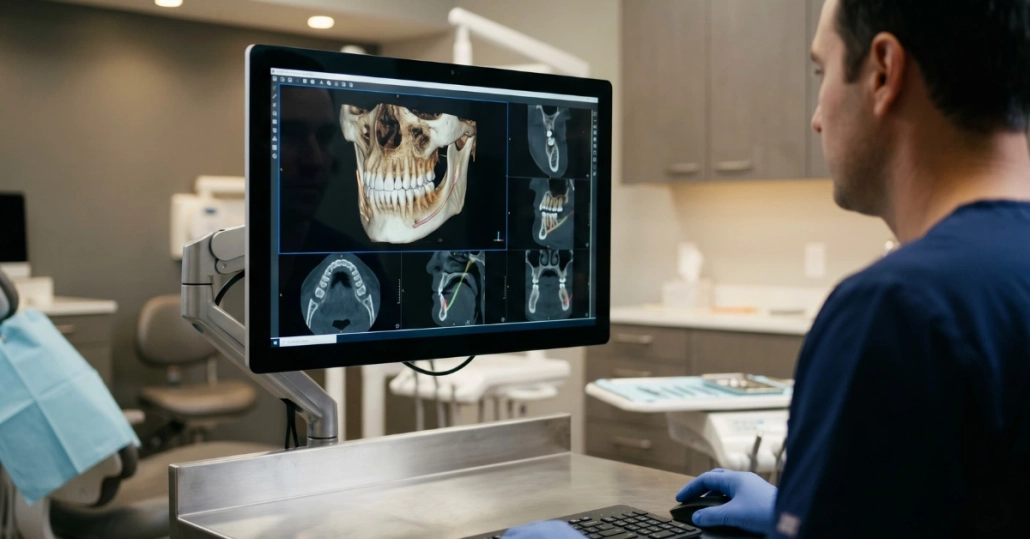
The All-on-4 vs All-on-6 decision starts with CT scan analysis showing your bone density, anatomical structures, and implant placement options. Our clinical team uses specialized planning software to virtually position implants in optimal locations, measuring bone contact, angulation requirements, and proximity to nerves and sinuses. This digital planning reveals whether four implants provide adequate support or whether your case benefits from six anchor points before any surgical planning begins.
Your consultation takes 45 to 60 minutes at our Austin-area locations. We discuss your dental history, current challenges, aesthetic goals, and timeline preferences. Dr. Owens and the clinical team examine your existing teeth or dentures, assess tissue health, and explain which full-arch approach appears suitable based on initial evaluation. CT imaging happens either that day or within the week. Then we review findings together to finalize treatment planning.
The CT analysis examines specific factors that determine All-on-4 vs All-on-6 recommendations. Bone density measurements show whether four implant sites provide sufficient support or whether six locations offer better distribution. Anatomical mapping identifies sinus position, nerve pathways, and existing bone pathology that might favor one approach over the other. Bite force estimation based on jaw musculature and wear patterns helps predict whether four or six implants better accommodate your chewing habits over the long term.
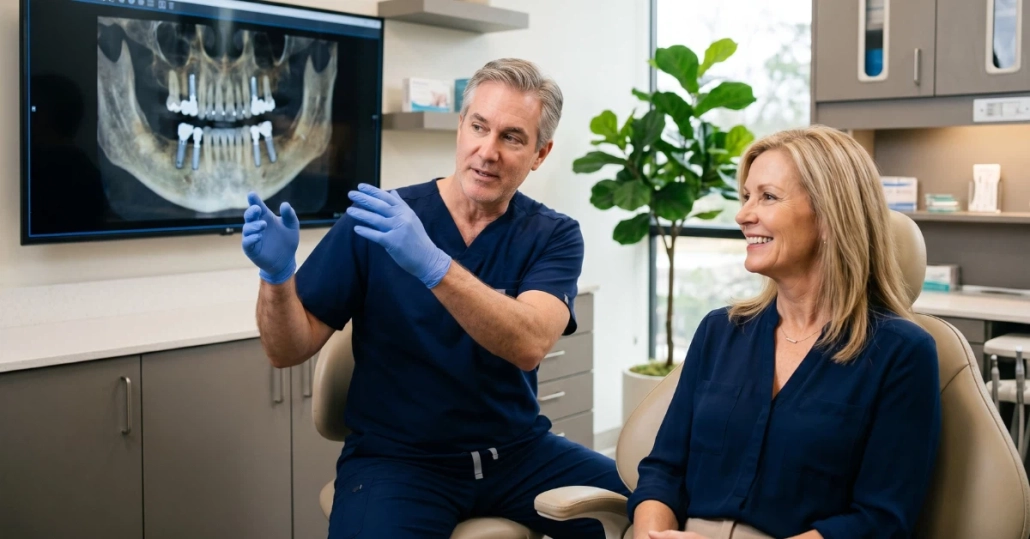
We show you virtual implant placement on your CT scans during consultation. You see where posts would be positioned for All-on-4, where additional implants would go for All-on-6, and what anatomical factors drive these recommendations. The implant placement overview explains the surgical process in detail. Reading it before your consultation helps you ask better questions.
Beyond All-on-4 and All-on-6, some patients also ask about the Stabili-Teeth™ system as an alternative stabilization approach. That discussion is part of your consultation when relevant to your anatomy and goals. Similarly, if you're curious about material alternatives, we can discuss how ceramic dental implants compare to standard titanium posts for your specific case.
For Central Texas patients comparing All-on-4 and All-on-6, we offer CT scans at our Round Rock and Temple locations with thorough consultation and planning discussion. The imaging takes approximately 15 minutes, the planning review takes another 45 minutes, and you leave understanding which approach fits your anatomy and goals. No pressure to decide immediately. Take the information home, consider it carefully, and return with questions before scheduling surgery.
Frequently Asked Questions About All-on-4 and All-on-6 Dental Implants
Is All-on-6 better than All-on-4?
All-on-6 is better in specific clinical situations, not universally. The system distributes chewing force more evenly across six anchor points, which benefits patients with compromised bone density, uneven bone loss patterns, or exceptionally heavy bite forces. A 2023 finite element analysis (Pandey et al., PMC10159094) confirmed All-on-six showed more favorable biomechanical behavior under multiple loading conditions. All-on-4 provides comparable long-term outcomes for patients with adequate anterior bone density at $3,000 to $5,000 less per arch. Your CT scan determines which system fits your anatomy.
Which is better for me, All-on-4 or All-on-6?
The answer depends on your specific bone anatomy, bite forces, and budget. All-on-4 fits patients with good anterior bone density and adequate posterior bone for angled implants. The six-implant version fits patients with compromised or uneven bone patterns, heavy bite forces, or those who want maximum redundancy. Both serve different clinical situations well. A CT scan of your jaw is the only reliable way to determine which approach gives predictable outcomes for your case. We review the imaging with you during consultation and explain the clinical reasoning behind the recommendation.
What is the failure rate of All-on-4 vs All-on-6?
Both systems achieve 95%+ clinical success rates in healthy patients with proper surgical placement and appropriate patient selection. All-on-6 offers a built-in redundancy advantage. If one implant fails to fully integrate, five remaining posts still support the restoration. All-on-4 has a lower margin for individual implant failure, though it maintains strong success rates when placed in adequate bone by experienced surgeons following proper protocols. Overall success depends more on patient selection, bone quality, and surgical execution than on implant count alone.
How long do All-on-6 dental implants last?
With proper care and professional maintenance every 4 to 6 months, All-on-6 dental implants can last 15 to 20+ years. The titanium implant posts themselves may last a lifetime through osseointegration with the jawbone. The prosthetic restoration, the visible teeth, typically requires refurbishment or replacement after 15 to 20 years due to normal wear on the prosthetic material. Longevity depends significantly on home care habits, maintenance compliance, and avoiding habits that place excess stress on the restoration.
What are the disadvantages of All-on-6?
The main disadvantages of All-on-6 include higher cost ($3,000 to $5,000 more per arch than All-on-4), longer surgery time (an additional 30 to 60 minutes per arch), potential need for bone grafting if adequate bone isn't available in all six locations, and slightly more post-operative swelling from the additional surgical sites. All-on-6 also requires more bone volume overall, which may not suit every patient's anatomy. Some patients who can't support six implants without extensive grafting may achieve better outcomes with a well-planned All-on-4 approach.
What is the downside of All-on-4 dental implants?
The primary limitations of All-on-4 are lower redundancy if one implant fails to integrate, higher stress concentration on each individual implant during chewing (particularly under heavy bite forces), greater reliance on carefully controlled posterior angulation for long-term stability, and more cantilever force on the prosthetic framework spanning between four anchor points instead of six. For patients with exceptionally heavy bite forces or compromised bone in certain areas, these factors can make All-on-6 a more appropriate recommendation despite the additional cost.
What is the 3-2 rule for dental implants?
The "3-2 rule" refers to a clinical spacing guideline that recommends a minimum of 3 millimeters of bone between adjacent implants and roughly 1.5 to 2 millimeters between an implant and the adjacent natural tooth root. These spacing minimums help preserve the bone between implants, support healthy gum tissue around each post, and reduce the risk of bone loss between closely-spaced implants. For full-arch cases like All-on-4 and All-on-6, the 3-2 rule shapes how surgeons distribute implants across the arch and is one of several factors CT-guided planning verifies before surgery.
How does All-on-4 compare to All-on-6 and All-on-8?
All-on-4 uses four implants for an efficient, lower-cost approach that works well for patients with adequate bone in the right locations, costing $20,000 to $28,000 per arch in Austin. All-on-6 adds two anchor points for better force distribution and redundancy and is the preferred choice when bone patterns support six placement sites, at $23,000 to $32,000 per arch. All-on-8 uses eight implants for maximum support and is typically reserved for patients with very large arches, extremely heavy bite forces, or medical factors that make maximum redundancy necessary. Most Central Texas patients achieve excellent long-term outcomes with four or six implants. Exploring all tooth replacement options with your surgeon before deciding is the right approach when any of these systems might apply to your case.
Clinical References
- Pandey C, Rao DJ, Kumar BPN, et al. Three-dimensional finite element analysis of stress distribution and displacement of the implant-supported prosthesis under various loading conditions: A comparison between All-on-four and All-on-six treatment concepts. Journal of Indian Society of Periodontology. 2023. Available at: PMC10159094.
- American Dental Association. Dental Implants overview, MouthHealthy patient resource. Available at: mouthhealthy.org/all-topics-a-z/dental-implants.
- American Academy of Implant Dentistry. What Are Dental Implants? Patient information. Available at: aaid-implant.org/what-are-dental-implants.
Making Your All-on-4 or All-on-6 Decision
The All-on-4 vs All-on-6 dental implants decision should follow evidence from your CT scan showing which approach provides stable support for your specific bone anatomy and functional needs. Both systems deliver fixed teeth that let you eat, speak, and smile without the limitations of dentures or failing natural teeth. The right choice depends on clinical factors we've covered. Bone density patterns, anatomical structures, bite characteristics, and whether four or six implants optimize force distribution in your case.
One honest note. Internet research alone won't answer this question for you. Your anatomy decides which system works, not general information about what typically succeeds in other patients. Some patients may clearly need All-on-6 because their bone structure demands additional support. Others are good All-on-4 candidates where six implants would add cost without meaningful benefit. The All-on-4 teeth in a day page explains how immediate-load protocols work for patients who are strong candidates for the four-implant approach.
If you've been comparing dental implants vs bridges or considering whether full-arch treatment is the right direction for your situation, that broader context belongs in the consultation conversation too. Full-arch treatment is a significant decision. The right starting point is always a CT scan and honest clinical review of your specific anatomy.
Austin, Round Rock, and Temple-area patients can typically book consultations within one week. Bring any recent dental records, a list of current medications, and questions about full-arch dental implants that concern you.