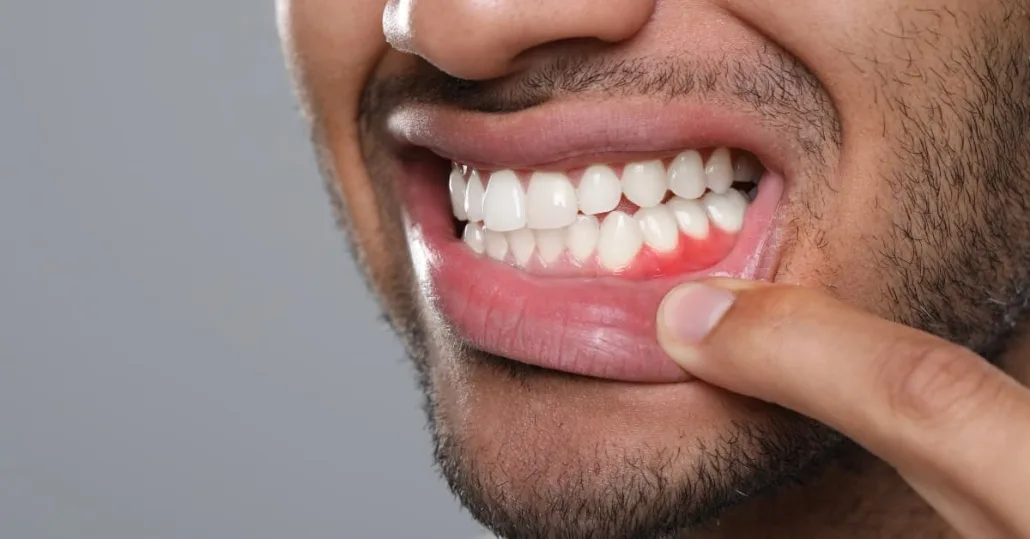
Periodontal Disease Treatment for Every Stage, From Deep Cleaning to Surgery

Table of Contents

Periodontal disease treatment starts without surgery, with a professional cleaning for gingivitis and a deep cleaning below the gumline for periodontitis. Gingivitis is reversible. Periodontitis can’t be reversed, but professional treatment can slow it down and manage it. It’s also common. In CDC figures from survey data for 2009 to 2014, about 4 in 10 U.S. adults aged 30 and older had periodontitis.

Written by Dr. Kris Owens, DDS, MS, Periodontist at Optima Dental Surgery Center
Dr. Owens is board certified in both periodontology and dental implant surgery and has held an active membership with the American Academy of Periodontology since his residency. He practices at our Round Rock office and serves patients from across the Austin area.

Deep cleaning is the first step for periodontitis and the treatment of choice in American Dental Association guidance. Will it hurt? You can be numbed with a local anesthetic while it’s done.

With the cleaning done, surgery comes later, if at all. After a deep cleaning, many patients need no further treatment, the American Academy of Periodontology reports, though most still need ongoing maintenance.

Left untreated, periodontitis deepens the pockets around your teeth and destroys bone, until teeth can loosen and may fall out or need removal. Treatment can slow that process down.

At Optima Dental Surgery Center in Round Rock, our periodontal disease treatment options run from deep cleaning to laser therapy and periodontal surgery.

Not sure which stage you're in? Dr. Kris Owens can examine your gums and explain your options at a free consultation.


What Each Stage of Gum Disease Means for You
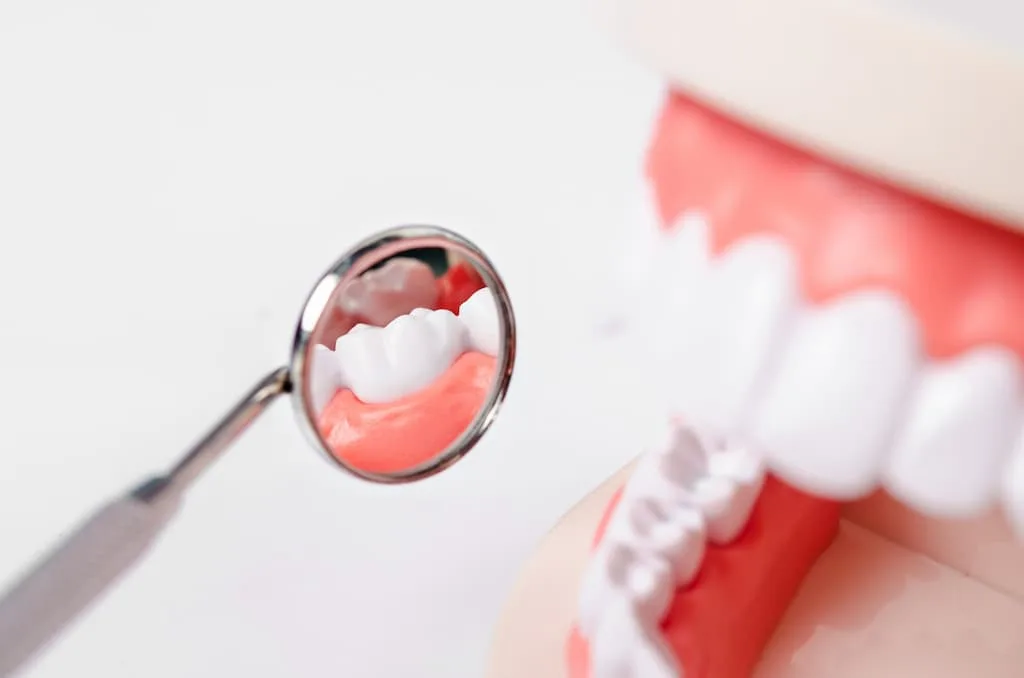
dental mirror reflecting gum health during a periodontal examination in austin

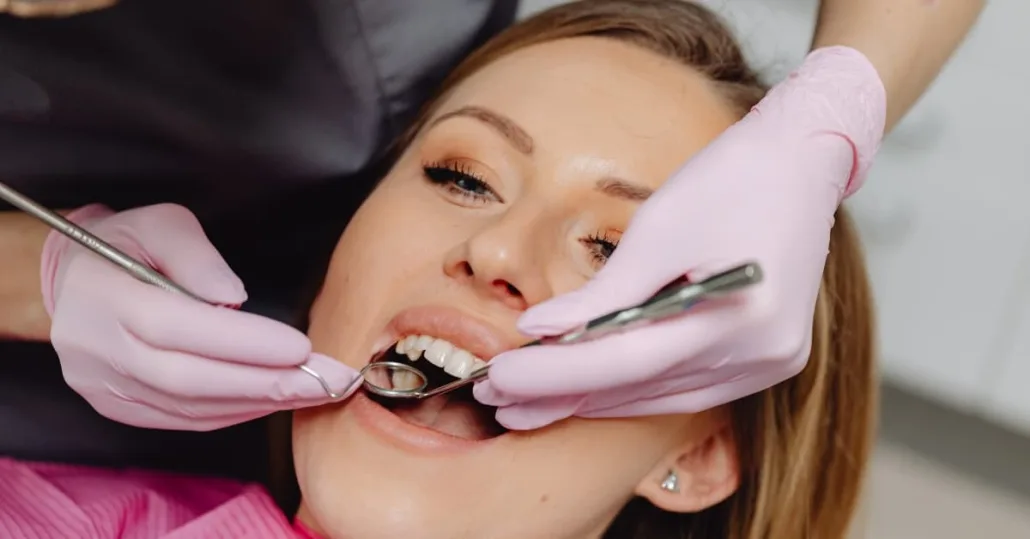
Gum disease begins as gingivitis, the stage that can still be reversed. Plaque left on your teeth can inflame the gums, which turn red and swollen and may bleed easily. A professional cleaning followed by daily brushing and flossing can usually stop gum disease at this stage, according to the ADA’s MouthHealthy site.

Bleeding gums, gums pulling away so teeth look longer, loose or sensitive teeth, and bad breath that lingers are all reasons to get checked. Each appears on NIDCR’s symptom list and gets more detail in our guide to the early warning signs of gum disease.

Periodontitis is the later stage, when the disease spreads to the bone that supports your teeth. It’s staged from I to IV under the 2017 classification the ADA describes, mainly by how much attachment and bone has been lost. A grade is added for how fast the disease is moving, with smoking and diabetes among the factors weighed. For you, a periodontitis diagnosis at any stage means slowing the disease and keeping it stable.


Non-Surgical Gum Disease Treatment Comes First
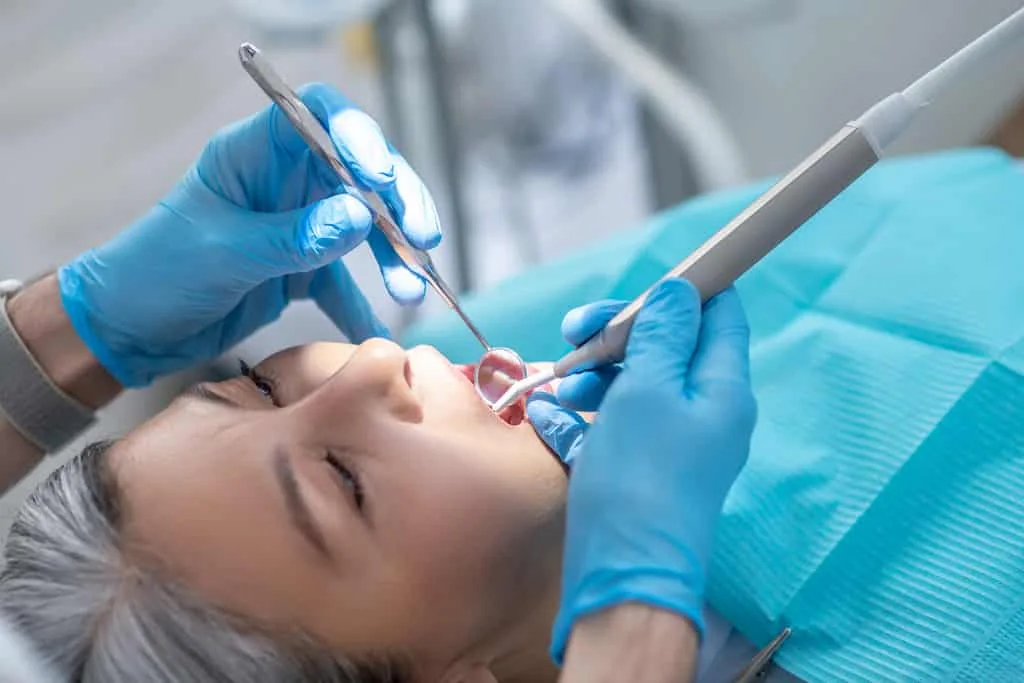
root planing treatment being performed as a non-surgical periodontal disease treatment option

For periodontitis, the non-surgical first step is scaling and root planing, often called a deep cleaning. Scaling clears the plaque and hardened tartar below the gumline. You can’t brush tartar away, the CDC notes, so this part takes professional instruments. Root planing then smooths each root so plaque and toxins have a harder time sticking to it.

Cleaning every tooth surface often takes several sessions, the ADA says. Because inflamed gums can make the work uncomfortable, you may get a local anesthetic before scaling and root planing begins. I also try to save my questions for the moments when your mouth is free to answer them.

Laser periodontal therapy, another non-surgical option at our office, gave results similar to scaling and root planing alone in controlled studies, the AAP notes.


When Gum Surgery Becomes Part of the Plan

The decision about surgery comes when your gums are measured again after the deep cleaning. For pockets of 4 to 5 mm that remain, the European clinical guideline suggests another round of cleaning. Deep pockets of 6 mm or more in stage III periodontitis are a different case, and for those the guideline suggests access flap surgery.

Periodontitis itself can’t be reversed, yet some of the bone and tissue it destroyed can be rebuilt. Regenerative procedures use membranes, bone grafts or tissue-stimulating proteins for that, and the AAP says they can reverse some of the damage. The disease still needs managing afterward. Where gums have pulled back from a root, a gum graft can cover it.

I perform bone grafting and periodontal surgery at our Round Rock office, so if surgery joins your plan, your care stays with the same team. You won’t have to get to know a new waiting room, either.


What Your Exam Looks At

austin periodontist reviewing x-rays and explaining periodontal treatment plan to a patient

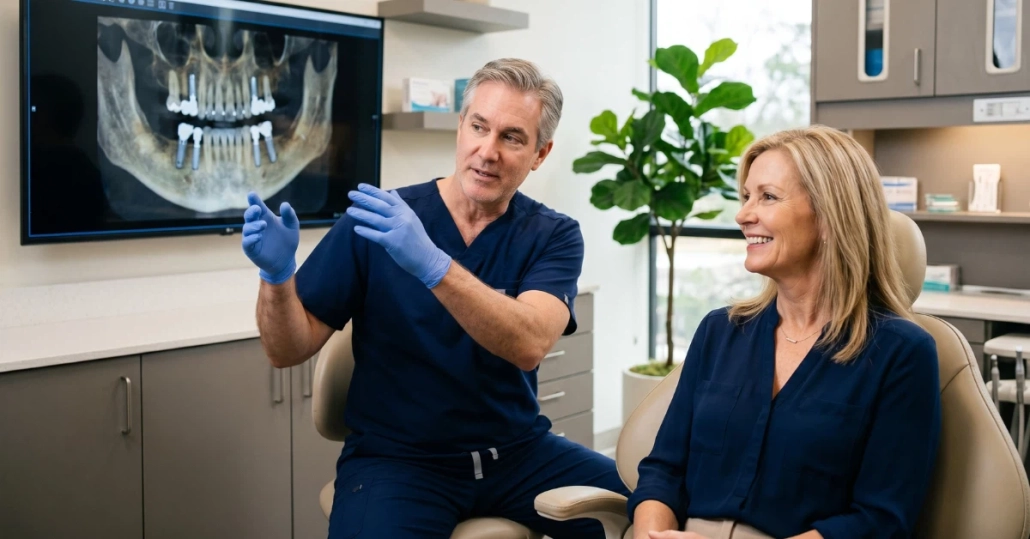
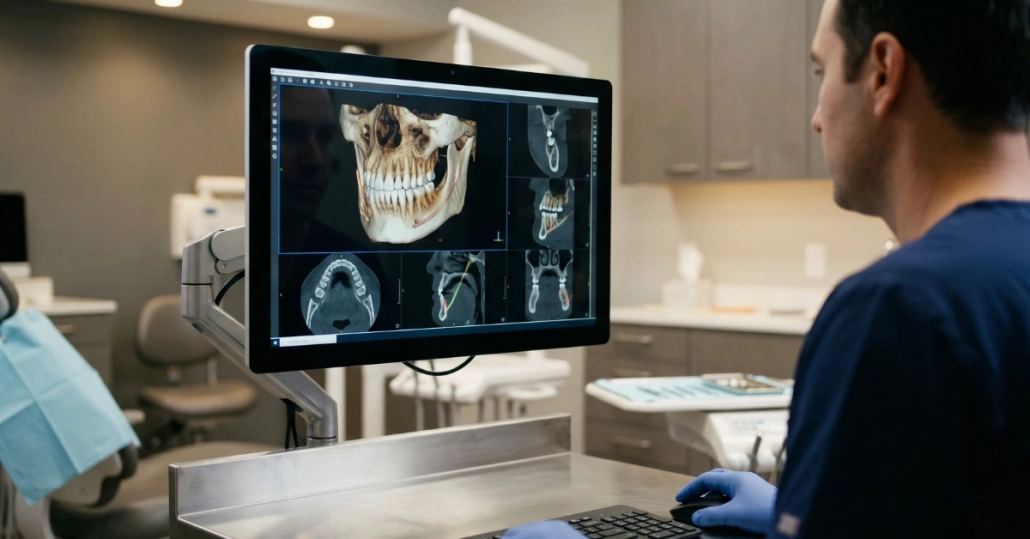
At your exam, I look at the bone around your teeth and at your health history. Bone lost to gum disease shows on an x-ray. In my office, cone-beam CT adds a three-dimensional map of bone levels and pocket depth, which I use alongside the pocket measurements. I enjoy these scans more than you will, so I’ll stick to what yours show. Healthy pockets usually measure 1 to 3 mm, according to NIDCR.

If you smoke or use tobacco, that’s the most significant risk factor for gum disease, according to NIDCR. Tobacco use can also delay healing and make treatment less successful. Quitting smoking counts as part of periodontitis treatment in the European guideline.
Diabetes and periodontitis are considered to have a two-way relationship, in which high blood sugar affects your gums and periodontitis affects blood sugar control. Whether gum treatment improves blood sugar control is still inconclusive, the ADA says. A 2018 review the ADA summarizes linked periodontitis with worse type 2 diabetes complications, part of the wider picture of how gum disease relates to the rest of your health.

Want a periodontist to read your x-rays? Book a free consultation with Dr. Kris Owens, or call (512) 341-2321.

Your First Month After a Deep Cleaning, and the Years After

Pain after a deep cleaning could last 1 to 2 days, and teeth may stay sensitive for up to a week, according to a Humana guide that cites the ADA. Bleeding and tenderness should go away within 3 to 4 weeks, says MedlinePlus.

By about 4 weeks your gums show the full effect of the cleaning, per the ADA, so that’s when measuring them again tells you the most. In my reading of the guideline, pockets that have tightened by then may keep you on the non-surgical path. If some stay deep, the next step depends on how deep. No one can promise which way your gums will go before that measurement.

Once active treatment ends, maintenance visits continue for life, because a periodontitis patient remains one even after successful therapy. The guideline links irregular attendance with more tooth loss than regular visits. The interval falls between 3 and 12 months, set by your risk and how your gums look after treatment. At home, brush twice daily and floss every day, as the CDC advises. You get to do that part of the plan on your own schedule, and nobody hands you a bib.


What a Deep Cleaning Costs and How Insurance Pays
understanding the cost of periodontal disease treatment in austin and round rock

You’ll get exact pricing at your free consultation, based on the plan your exam supports. For a sense of scale, Humana’s pricing tool for Orlando, Florida, put scaling and root planing at $235 to $303 per quadrant. A quadrant is one of four equal sections of your mouth. Humana’s tool was last accessed on Oct. 11, 2025. One insurer’s figure for one city is no substitute for your quote.

When scaling and root planing is medically necessary, Humana says a dental plan may cover some of the cost. Gum disease treatment sits under basic care in Humana’s guide to dental coverage, a tier many plans pay at 80%, against 50% for major care. Many plans still cap annual benefits at $1,000, while some now allow $2,000 or more, ADA News reported in December 2025. For major procedures, most insurers set a waiting period of 6 or 12 months after you enroll.

We verify your insurance benefits before your appointment. At the consultation we go over out-of-pocket costs and financing, including our partners Cherry and CareCredit.


Dental Implants After Gum Disease

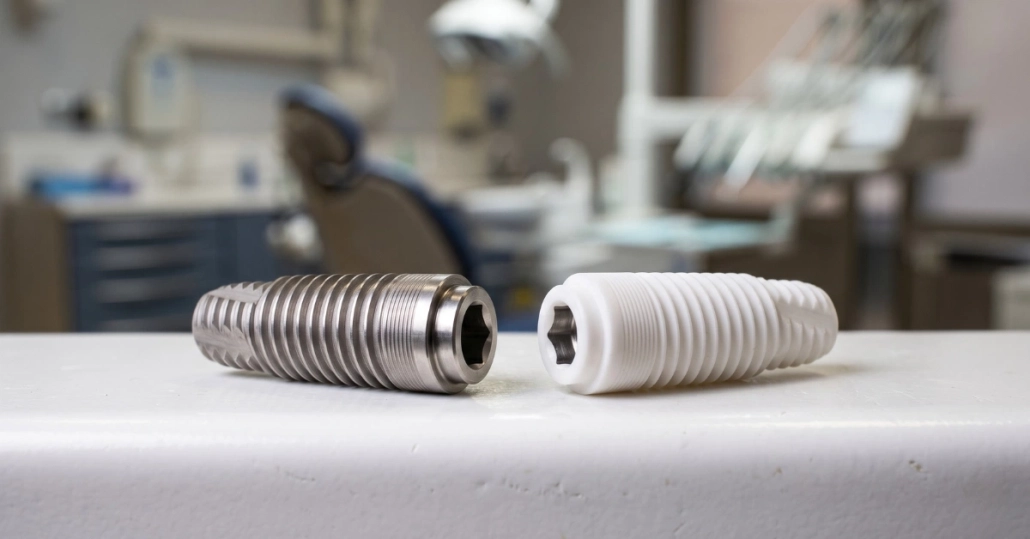
If you’ve lost a tooth to periodontitis, implants may be an option, the AAP notes, though your history raises the risk of peri-implantitis. Peri-implantitis is an inflammation of the tissue around an implant, with progressive loss of the bone supporting it. The AAP’s ideal candidate has gums free of periodontal disease, one factor in who can get dental implants.

Before an implant goes in, the European guideline on implant care advises treating gum disease to a stable state, with supportive care in place. An implant also needs enough jawbone to hold it. Where bone is missing, the ridge can be built up with bone or a bone substitute before placement.

Find Out What Your Gums Need

At a free consultation at Optima Dental Surgery Center, Dr. Kris Owens will examine your gums and go over each option and its cost with you. You can ask every question on your list before anyone asks you to open wide. Call (512) 341-2321 or book online.

Schedule Your Free Consultation


Frequently Asked Questions About Periodontal Disease Treatment

Can periodontal disease be cured or only managed?

Periodontitis is managed. It can't be reversed, the CDC says, though professional treatment can slow it and keep it under control. Gingivitis, the earlier stage, is reversible. After treatment the goal is a stable state, which the European guideline defines in part as bleeding at under 10% of the sites your periodontist probes.

Does periodontal disease treatment hurt?

A deep cleaning can feel uncomfortable on inflamed gums, so you can be numbed for it, MedlinePlus notes. Afterward, pain could last 1 to 2 days, according to Humana's guide. For surgery, periodontists are trained in comfort measures such as sedation or anesthesia, according to the AAP.

How long does periodontal disease treatment take?

A deep cleaning often takes several sessions, and your gums need about 4 weeks to show its full effect, per the ADA. Whether more treatment follows depends on that re-measurement. For periodontitis, maintenance visits then continue for life.

Can I still get dental implants after having gum disease?

Implants may be an option once gum disease has been treated to a stable state and you're in a supportive care program. A history of periodontitis raises the risk of peri-implantitis, a 2017 World Workshop review found, as do poor plaque control and skipped maintenance after implant therapy.

Will I lose my teeth if I have gum disease?

Periodontitis and tooth decay are the two main causes of tooth loss, according to the CDC. Left untreated, pockets deepen until teeth can loosen and fall out or need removal. Regular maintenance after treatment is linked with less tooth loss than irregular attendance in the European guideline.

How often will I need maintenance cleanings after treatment?

Plan on a visit every 3 to 12 months for life after periodontitis treatment, the range the European guideline recommends. Where you fall in that range depends on your risk and how your gums look after treatment, and your interval can change as those do.

Does insurance cover periodontal disease treatment?

Your plan may cover part of it. We verify your benefits before your appointment. Humana says plans may cover some of the cost of medically necessary scaling and root planing. What you pay then depends on coinsurance, which can be as low as 10% or nothing for some treatments and 50% or more for complex procedures, Delta Dental of Washington explains.

What happens if I don't treat my gum disease?

Untreated gum disease can spread to the bone that supports your teeth and make chewing painful, NIDCR says. Untreated periodontitis can also worsen other chronic conditions, diabetes among them, according to the CDC. Heart disease has been associated with periodontitis, though a causal relationship hasn't been established, the ADA says. Treatment can slow the disease and keep it under control. After a deep cleaning, many patients need nothing more than regular maintenance.

Plan Your Next Step at a Free Consultation With Dr. Owens
Your free consultation at Optima Dental Surgery Center is with Dr. Kris Owens, who is board certified in both periodontology and dental implant surgery. Bring your questions about treatment, recovery and insurance, and we will go through them with you.
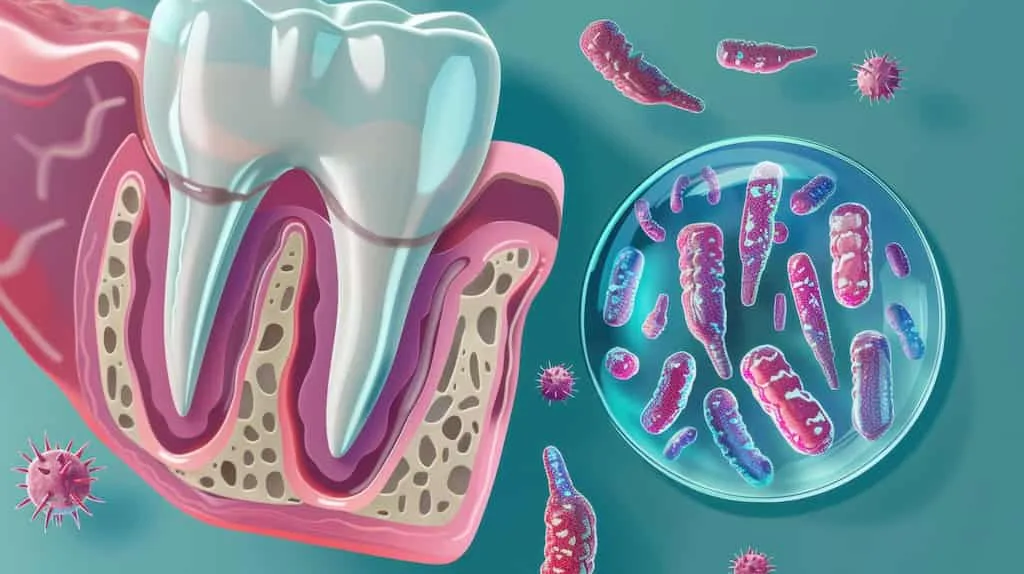
Illustration of a tooth cross-section and bacteria in a petri dish.

Related posts

Dental implant financing in Austin explained: what 4 partners offer, what a monthly payment really looks like, and how to prequalify without a hard pull.

How to Finance Dental Implants – A Guide to Monthly Payments

I have sat across the desk from hundreds of patients who want dental implants and then go quiet the moment...

How Far Should You Travel for Dental Implants? What Central Texas Patients Actually Consider

If you live in Waco, Temple, the Hill Country or Killeen, the closest dental implant conversation usually starts at a...

Dental Implant Recovery Timeline Week by Week

Most full-arch implant patients walk in with the same questions during the first week. How much swelling is normal? When...

Full-Arch Dental Implants Cost in Austin in 2026

If you’re researching full-arch implants in Austin, the first thing you want is a real number. So how much do...

Dental Implant Consultation: 15 Questions to Ask Before You Commit

Your dental implant consultation is the single most important appointment in the entire implant process – and most patients walk...

What to Expect at a Dental Implant Consultation in Austin & Round Rock

You’ve done the research. You know you need dental implants. You may have visited one or two offices, sat across...

Dental Implants: Types, Materials, and Arch Systems

You’ve done your research. You’ve read about titanium and zirconia, seen ads for All-on-4 and Stabili-teeth®, and now you’re more...

Do You Really Need a Bone Graft for Dental Implants? What Your CT Scan Reveals

“Do I need a bone graft for dental implants” is one of the most common questions I hear in consultations,...

Dental implant procedure explained

The Dental Implant Procedure: A Stage-by-Stage Guide to What Actually Happens

Fear of the unknown is almost always worse than the procedure itself. In my experience, placing implants, most patients tell...

gum disease prevention

Gum Disease Prevention Simple Daily Habits That Make a Difference

Your teeth get most of the attention. Brushing, whitening, straightening – the focus almost always lands on the teeth themselves....

Categories

Ready to Transform
Your Smile?

Schedule your free consultation today.