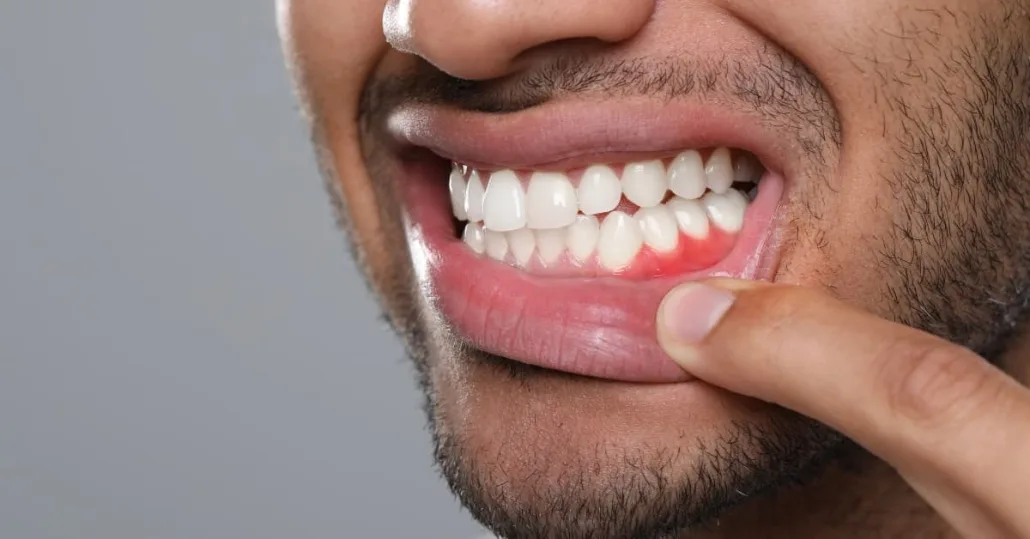
You are missing one tooth, maybe two, and your dentist has given you two options – a dental bridge or a dental implant. Both will fill the gap. Both will restore your smile. The price difference, though, can be several thousand dollars – and that number alone sends most people toward the bridge without fully understanding what they are agreeing to.
I want to walk you through what actually separates these two options, not just in cost, but in how each one works inside your mouth over time. The right choice depends on factors most comparison articles skip entirely – things like your adjacent tooth health, your bone density, and how long you plan to keep this restoration working for you. When patients come to Optima Dental Surgery Center weighing dental implants vs. bridges, the conversation usually shifts once they understand what a bridge actually requires of the teeth on either side of the gap.
Here is what you need to know to make a clear decision.
How Each Option Works
A dental bridge fills a gap by anchoring an artificial tooth to the natural teeth on either side of the missing space. Those neighboring teeth – called abutment teeth – are filed down significantly so crowns can be placed over them. The crowns then support the false tooth suspended in the middle. You end up with three connected crowns spanning the gap.
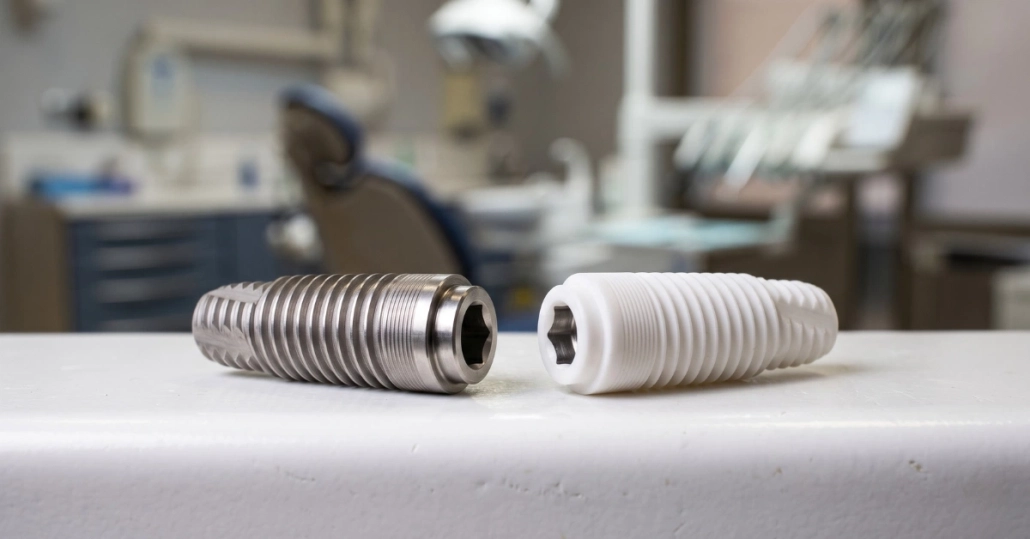
A dental implant works differently at the foundation level. A small titanium post is placed into the jawbone where the missing tooth root used to be. Over several months, the bone fuses to that post through a process called osseointegration – you can read more about the full implant placement process on our site. Once fully integrated, a crown is attached to the top of the implant. The result is a single, independent tooth replacement that does not involve any adjacent teeth.
That structural difference is what drives almost every other comparison between the two options.
What Happens to Your Bone When a Tooth Is Missing
This is the part of the conversation that surprises most people. When a tooth is removed, the jawbone underneath it starts to shrink. The bone exists, in large part, because the tooth root was stimulating it with every bite and chew. Without that pressure, the bone gradually resorbs – and that process begins within the first year after extraction.
A dental bridge replaces the visible tooth but does nothing for the bone beneath it. Over years, the bone loss continues under the bridge’s false tooth. You may notice the bridge eventually looks like it is floating slightly above the gum line as the tissue recedes. That is not just cosmetic – it can affect how the bridge fits and functions over time.
A dental implant mimics the function of a natural tooth root. The titanium post transmits bite forces into the bone, which signals the bone to maintain its density. Patients who receive implants typically preserve the bone volume in that area long-term. That matters more the younger you are when you lose the tooth, and it matters for how your face contour holds up over decades.
The Real Cost Comparison Over Time
The upfront cost of a dental bridge is lower than an implant – generally by a meaningful margin. But the “cost of a bridge” and the “cost of choosing a bridge” are two different figures. Here is why the long view changes the math.
Dental bridges carry an average lifespan of 10 to 15 years, though some fail sooner if the abutment teeth develop decay or the structure cracks. When a bridge fails, replacement is not as simple as putting in a new one. The abutment teeth, which were already modified to support the original bridge, may have deteriorated further – sometimes to the point where they can no longer support another bridge. That can mean extractions and a longer, more involved restoration.
Dental implants, when given the right implant care routine, can function for several decades. Many implant patients keep their implants for 20 to 30 years without needing replacement. The initial investment is higher, but the per-year cost often compares favorably over a lifetime of use. For patients concerned about that upfront figure, we offer multiple implant financing options so the decision does not come down to what you can pay right now.
There is also the cost to the abutment teeth themselves. Filing down healthy teeth to support a bridge introduces permanent damage to those teeth. They lose their natural enamel and become more vulnerable to decay under the crowns. A tooth that might have stayed healthy for decades now requires monitoring and carries a higher risk of future problems.
When a Bridge Makes Clinical Sense
A bridge is a reasonable option in specific situations. Understanding when it is the appropriate choice helps you evaluate whether it fits your circumstances.
- Insufficient bone volume for an implant – If significant bone loss has occurred at the extraction site and a bone grafting procedure is not feasible, a bridge may be the more practical path. Grafting can restore bone in many cases, but it adds time and cost.
- Adjacent teeth already need crowns – If the teeth on either side of the gap already have large fillings, cracked structure, or damage that warrants crowns regardless, a bridge uses those planned restorations productively.
- Medical conditions that affect healing – Certain conditions – uncontrolled diabetes, active periodontal disease, or specific medications affecting bone metabolism – may make implant surgery a higher-risk procedure. A bridge may be the better option while those conditions are addressed.
- Timeline constraints – A bridge can typically be completed in two to three appointments over a few weeks. An implant involves the placement surgery, a healing period for osseointegration, and then the crown – a process that commonly takes three to six months or longer.
When a Dental Implant Is the Stronger Long-Term Choice
For most patients replacing one or a few teeth with otherwise healthy surrounding dentition, an implant offers advantages that compound over time. Here are the clinical situations where an implant is typically the more appropriate recommendation.
- Healthy adjacent teeth – If the teeth on either side of the gap are intact, filing them down for a bridge introduces unnecessary risk to tooth structure that could otherwise remain untouched for decades.
- Adequate bone volume – Patients with sufficient bone density at the implant site have a strong foundation for a successful outcome. Reviewing the full implant candidate criteria can help you understand what factors matter most. A CT scan at your consultation can confirm whether you have enough bone or whether grafting would be needed first.
- Long-term thinking – Patients who weigh the 10-to-15-year replacement cycle of a bridge against the decades of function a well-maintained implant can provide often find the implant’s total cost picture more favorable.
- Multiple missing teeth with gaps between them – When missing teeth are spread across the arch and not adjacent to each other, a bridge is not a viable option for those separated gaps. Implants handle non-adjacent replacements independently.
- Replacing a back molar – Back molars take the heaviest bite forces. A bridge spanning a molar space places significant stress on the abutment teeth. An implant stands alone and absorbs those forces at the bone level, which is where they belong.
What the Consultation and CT Scan Tell You
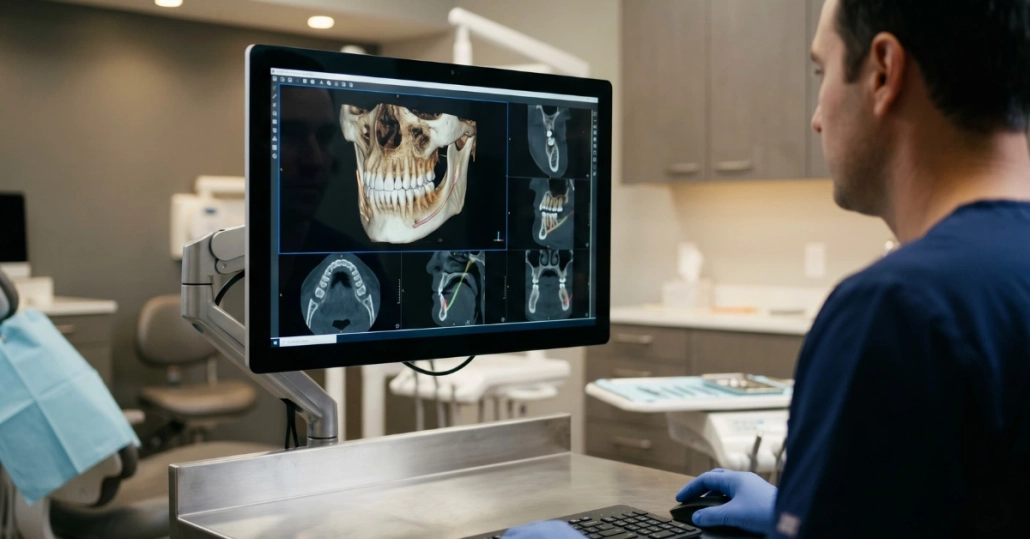
One of the most important differences between practices that evaluate implant candidates well and those that do not is the use of 3D imaging. A standard 2D dental X-ray shows you the teeth. A cone beam CT scan shows you the bone – its height, width, density, and the proximity of anatomical structures like the sinus cavity or nerve channels.
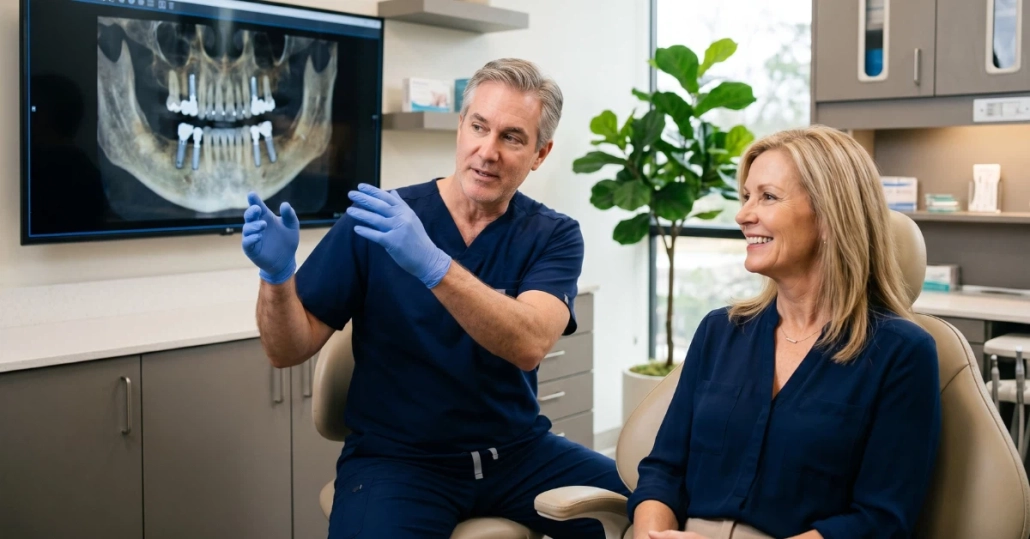
At Optima Dental Surgery Center, we include a CT scan evaluation as part of the initial consultation. I look at the bone volume at the proposed implant site, assess whether grafting would be needed, and explain what I see in plain language. The goal is for you to leave the consultation with a clear picture of your options and realistic expectations – not a vague treatment plan that leaves you guessing about cost and healing.
If you have already had a consultation elsewhere and received a bridge recommendation, it is worth asking whether a 3D scan was part of that evaluation. Bone volume assessments based only on 2D imaging can miss information that changes the recommendation. A second opinion with proper imaging costs you very little and may change your decision significantly.
At Optima, the initial consultation and X-rays are offered at no charge. That consultation is designed to give you real information, not a sales presentation.
What About Full-Arch Solutions Like Stabili-teeth®?
If you are missing several teeth rather than one or two, full-arch implant solutions like Stabili-teeth® fixed arch belong in your conversation. Stabili-teeth® uses implant posts to support a fixed arch of replacement teeth – a different tier of restoration from a conventional bridge or a removable partial denture. If that situation applies to you, ask about it specifically during your consultation.
Frequently Asked Questions
Is a dental bridge cheaper than an implant?
A bridge generally costs less upfront than a dental implant. However, bridges typically need replacement every 10 to 15 years, and replacement becomes more complicated if the supporting teeth have deteriorated. Over a 20-to-30-year period, the total cost of multiple bridge replacements may approach or exceed the cost of a single implant that continues functioning without replacement.
How long does a dental implant last compared to a bridge?
A dental bridge averages 10 to 15 years before needing replacement, though this varies based on oral hygiene and the condition of the supporting teeth. A properly placed implant can function for 20 to 30 years or longer with regular maintenance. The implant post itself is designed to be a permanent fixture.
Can I get a dental implant if I have bone loss?
Bone loss does not automatically disqualify you from an implant. In many cases, bone grafting can restore enough volume to support an implant. The extent of grafting needed depends on the degree of bone loss, and a 3D CT scan is the most accurate way to assess your specific situation. Some patients with significant bone loss may be better candidates for a full-arch solution – our full-arch implant guide covers those options in detail, including Stabili-teeth® as an alternative to single-tooth implants.
Making the Decision That Fits Your Situation
Dental implants vs. bridges is a question with a clinical answer that varies by patient. A person with healthy adjacent teeth, adequate bone volume, and a long-term outlook is a different case than someone with an already-compromised abutment tooth who needs a faster, simpler restoration.
The patients who feel most confident in their choice are usually the ones who asked for the full picture – what the adjacent teeth look like, what the bone volume shows on imaging, and what each option realistically looks like at year 15. If you are in the Austin, Round Rock, Waco or Temple area and want that conversation at no cost, our free consultation and free X-rays are available to you. Bring whatever records you already have and we will show you exactly what you are working with.