Your dental implant consultation is the single most important appointment in the entire implant process – and most patients walk in without a single question written down. You sit across from a surgeon, hear terms like “osseointegration,” “bone grafting,” and “full-arch restoration,” and walk out with a treatment plan you only half understand.
I see this regularly at Optima Dental Surgery Center. Patients come to their first dental implant consultation without a roadmap, and they leave uncertain – about the procedure, the timeline, and whether the price they were quoted covers everything. That’s not a position you want to be in when you’re making a decision that affects your health, your confidence, and your finances.
These 15 questions will give you clarity before you commit to anything. Write them down. Bring them with you. And if a surgeon rushes past your questions or gives vague answers, that tells you something important too.
✓ Bring This to Your Dental Implant Consultation
- This list of 15 questions (printed or on your phone)
- Your full list of current medications
- Any existing dental X-rays or imaging
- Your dental insurance card (even if coverage is limited)
- A notebook or way to record answers
- A trusted family member or friend if you’d like support
What Your Dental Implant Consultation Should Include First
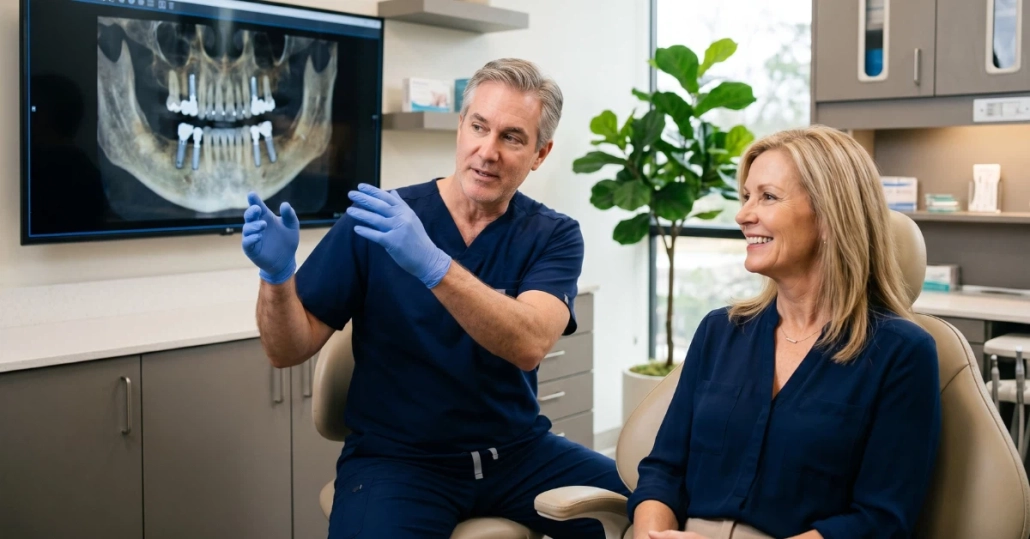
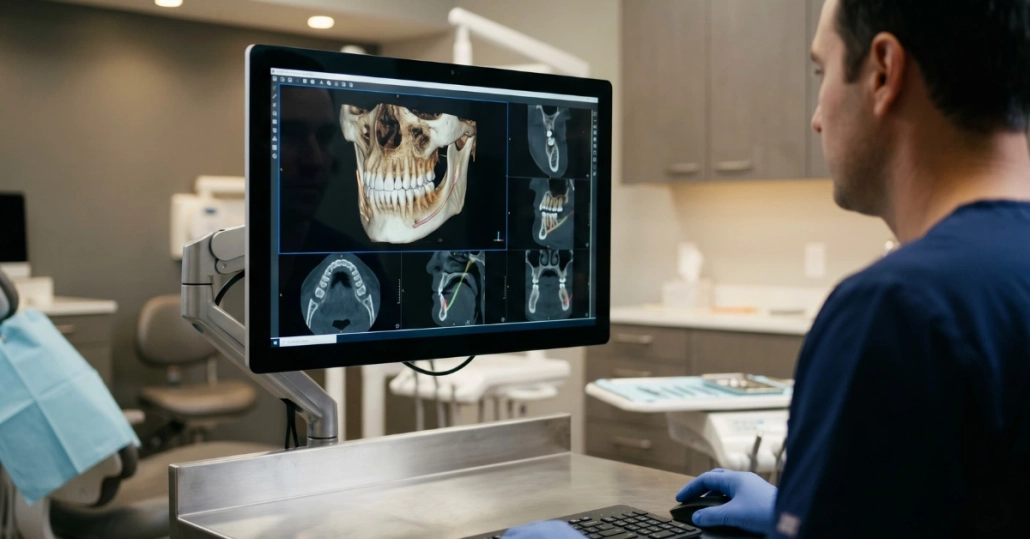
A thorough dental implant consultation goes beyond a quick look in your mouth. Before any of your questions can be answered meaningfully, your surgeon needs the full clinical picture. That typically includes a 3D cone beam CT scan, a complete oral health assessment, and a detailed conversation about your medical history.
If you show up for your dental implant consultation and no imaging is done, the answers to many of these questions will be estimates at best. No surgeon can give you an accurate treatment plan – or an honest price – without knowing your current bone density, gum tissue health, and the condition of surrounding teeth.
With that context in place, here are the 15 questions worth asking at every dental implant consultation.
Questions About Your Specific Situation
1. Am I a good candidate for dental implants based on what you’re seeing?
Many patients assume they qualify before a surgeon has reviewed their imaging. Understanding what makes someone a good implant candidate goes beyond missing teeth – it depends on bone volume, gum health, overall medical history, and lifestyle factors like smoking. Ask the surgeon to walk you through your specific scan and explain what they’re seeing, so you know whether you’re a straightforward candidate or whether there are complicating factors to address first.
2. Do I have enough bone to support implants, or will I need a bone graft?
Bone loss happens faster than most people expect after tooth extraction – and years of wearing dentures can accelerate that process significantly. If your jaw has experienced substantial bone loss, you may need to understand bone grafting before implants can be placed. This affects both your timeline and your total cost, so getting a clear answer upfront prevents significant surprises later.
If grafting is part of your treatment plan, ask for a thorough explanation of what the bone grafting for implants process involves, how long healing takes before implants can be placed, and what that adds to your overall timeline.
3. How is my gum health, and does that affect the procedure?
Active periodontal disease can undermine implant success. If you have gum disease that hasn’t been treated, implants may not be recommended until it’s resolved. Ask whether your gum tissue is healthy enough to proceed now, or whether you first need to learn what gum disease treatment involves. For patients with more advanced gum involvement, periodontal treatment before implants is often a necessary first step in the overall plan.
4. Are there any medical conditions or medications that could affect my outcome?
Certain health factors – including diabetes, autoimmune conditions, blood thinners, and bisphosphonate medications – can affect how your body responds to implant surgery and the healing process. Be open about your full medical history, and ask directly how anything in your history might influence the surgical approach or the expected results.
| Category | Questions to Ask | Why It Matters |
|---|---|---|
| Your Situation | Candidacy, bone, gums, medical history | Confirms you’re a fit before investing time or money |
| Treatment Plan | Implant type, count, timeline, interim teeth | Sets realistic expectations for the full process |
| Cost & Financing | Total cost breakdown, financing | Prevents sticker shock and hidden fees |
| Surgeon & Facility | Training, who performs surgery, imaging used | Validates the team before you trust them with your care |
| Aftercare | Recovery timeline, warning signs, maintenance | Prepares you for what comes after surgery |
Questions About the Dental Implant Treatment Plan
5. What type of implant system are you recommending, and why?
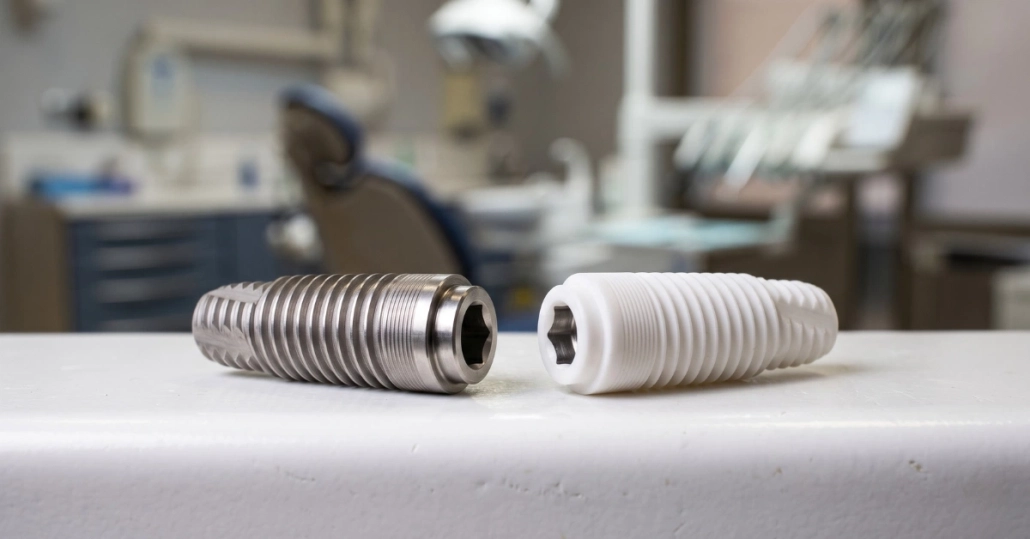
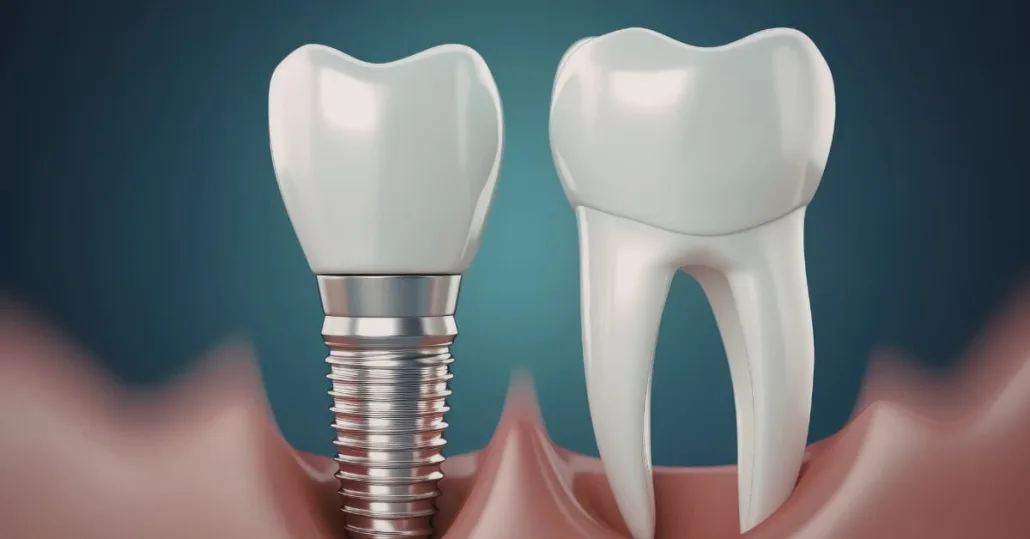
Not all implant systems are the same. There are different designs and approaches – including traditional single implants, implant-supported bridges, and full-arch dental implant systems like All-on-4 or Stabili-teeth®. If a full-arch approach is being discussed for your case, it’s worth understanding how the Stabili-teeth® full-arch system differs from other options before making any decisions. Ask the surgeon to explain their clinical reasoning – not just name a brand.
6. How many implants will I actually need?
The number of implants placed matters for both cost and structural support. For full-arch cases, some systems use four implants per arch while others use more. Reviewing the eligibility factors for full-arch cases can help you understand why implant count varies before your consultation. Ask specifically how many implants your plan includes and what that number means for long-term stability.
7. What does the full dental implant consultation reveal about my treatment timeline?
Dental implant treatment is rarely a single appointment. Depending on whether bone grafting is needed, how many teeth are being replaced, and how your body heals, the timeline from first procedure to final restoration can range from a few months to over a year. Ask for a realistic timeline specific to your case – not a best-case scenario.
8. Will I have teeth during the healing process?
This is one of the most common questions patients forget to ask until they’re already scheduled for surgery. For full-arch cases, many patients receive a provisional set of teeth on the day of surgery – but the specifics depend on the treatment approach. Ask exactly what you’ll have during each phase of healing and when your permanent restoration will be placed.
Questions About Cost and Financing at Your Dental Implant Consultation
9. What is the total cost of treatment, and what exactly does that include?
Implant pricing is one of the most confusing parts of the process for patients. Some practices quote a low per-implant price that doesn’t include the abutment, the crown, or any grafting work. Others quote an all-in number that covers everything. Ask for a written breakdown of what the total cost includes – implants, abutments, restorations, anesthesia, grafting, follow-up visits, and what happens if something needs adjustment later.
If two practices give you very different quotes, this breakdown will help you understand whether you’re actually comparing similar treatment plans – or comparing apples to oranges.
10. Does your practice offer financing, and what are the terms?
Full-arch dental implants are a significant investment, and most patients don’t pay out of pocket all at once. Ask what financing options are available, which lenders the practice works with, and what the approval process looks like. Reviewing implant financing options in Austin before your consultation can help you walk in knowing which questions to ask about monthly payment terms. Understanding your options before you commit helps you plan realistically.
11. What does my dental insurance cover, if anything?
Many dental insurance plans offer limited or no coverage for implants. However, some plans cover portions of the process – such as extractions, bone grafting, or the crown portion of a single implant. Ask the practice to help you understand what your plan covers before your procedure so you know exactly what you’ll be responsible for.
💬 Cost Questions Worth Writing Down
- Is the quoted price all-inclusive, or are there add-ons?
- What happens to my cost if I need bone grafting?
- Do you offer in-house financing or third-party lenders?
- What’s the minimum credit score for your financing programs
- Is there a fee if I need a revision or adjustment after placement?
Questions About the Surgeon and the Facility
12. What is your background and training in implant surgery?
This is a fair question, and any qualified surgeon should answer it without hesitation. You want to know their educational background, any specialty training in implantology, and their experience with the specific procedure being recommended for your case. Full-arch cases are more complex than single-tooth replacements. If that’s your situation, ask specifically about the surgeon’s experience with full-arch implant cases.
13. Will you be performing the surgery, or will another provider be involved?
In some practices, the consultation is conducted by one provider while the surgery is performed by another – or parts of the treatment are handled by different team members. Know who will be doing what before you commit. Continuity of care matters, and you should feel confident about every provider involved in your treatment.
14. What imaging and diagnostic tools will be used to plan my treatment?
3D cone beam CT (CBCT) imaging gives surgeons a detailed, three-dimensional view of your bone structure, nerve pathways, and anatomy – essential for accurate implant placement and avoiding complications. Understanding how implant placement is planned – including what diagnostic steps are involved – helps you evaluate whether a practice is approaching your case thoroughly. If a practice is planning your full treatment from standard 2D X-rays alone, that’s worth asking about directly.
Questions About Aftercare and Long-Term Outcomes
15. What does recovery look like, and what should I watch for?
Understanding what to expect after surgery – what’s normal and what isn’t – helps you recover with confidence. Ask about typical discomfort levels, activity restrictions, dietary changes during healing, and how long before you feel like yourself again. This is one area where a good dental implant consultation pays off: knowing the recovery picture before surgery removes a lot of anxiety. For full-arch cases, reviewing what full-arch recovery actually looks like week by week gives you a practical picture of what lies ahead.
Beyond immediate recovery, ask about long-term maintenance. Dental implants require regular care – professional cleanings, checkups, and monitoring the health of the surrounding gum tissue and bone. Knowing how to care for dental implants long-term is something every patient should understand before the procedure, not after.
| 🟢 Green Flags at a Good Consultation | 🔴 Red Flags to Watch For |
|---|---|
| 3D CBCT imaging taken and reviewed with you | Treatment planned with only 2D X-rays or no imaging |
| Surgeon walks you through your scan in detail | Rushed appointment under 30 minutes |
| Written, itemized cost breakdown provided | Vague pricing with no written estimate |
| All questions answered without pressure to decide | Pressure to sign or pay a deposit on the same day |
| Surgeon explains candidacy and any complicating factors | No mention of bone grafting or gum health evaluation |
| Financing options explained clearly | Cost conversation avoided or deflected |
One More Question Worth Asking Yourself After the Dental Implant Consultation
Before you sign anything, ask yourself whether the surgeon answered your questions clearly and without rushing you. Did they walk you through your imaging? Did they give you a written cost breakdown? Did you feel heard?
The right implant team won’t pressure you to decide on the spot. They’ll give you the time and information you need to feel genuinely confident – because a decision this significant deserves that level of care.
If you left a consultation with more questions than answers, that’s useful information. And if you’re still searching for a team that explains everything without the pressure, we’d welcome the chance to show you what a thorough implant consultation looks like – from 3D imaging to transparent pricing to honest answers about recovery.
Bring These Questions to a Consultation That Will Actually Answer Them
At Optima Dental Surgery Center you sit across from the surgeon who will perform your procedure. CT scan and X-rays included at no charge. Call (512) 341-2321 or schedule online.
Frequently Asked Questions About Your Dental Implant Consultation
For more answers to common implant questions, visit our frequently asked questions about dental implants page.
How long does a dental implant consultation usually take?
A thorough dental implant consultation typically takes 60 to 90 minutes, especially when 3D imaging is included. If your appointment is significantly shorter and no imaging is done, you may not have the full clinical picture needed to make a confident decision.
Can I get dental implants if I’ve had bone loss from wearing dentures?
Bone loss from long-term denture wear is common, and it doesn’t automatically disqualify you from implants. According to the American Academy of Implant Dentistry, bone grafting can often restore adequate volume for implant placement. Your surgeon will assess your bone levels through imaging and explain what’s possible in your specific situation.
What is the difference between All-on-4 and Stabili-teeth® during a consultation?
Both are full-arch implant systems designed to replace an entire arch of teeth using a set number of implants. They differ in implant design, positioning, and the prosthetic that attaches to them. For a closer look at one approach, the All-on-4 implant approach page covers how the procedure works and what to expect. The right choice depends on your bone anatomy, bite forces, and the clinical judgment of your surgeon.
Is the dental implant consultation free?
Policies vary by practice. Some offer complimentary consultations, while others charge a fee – particularly if 3D imaging is included. It’s worth asking when you call to schedule. At Optima Dental Surgery Center, consultations are offered at no charge. The NIH National Institute of Dental and Craniofacial Research also notes that informed patient consultations improve treatment outcomes, making this first appointment genuinely valuable regardless of cost.
What happens if my implant doesn’t integrate properly?
Implant failure – where the implant doesn’t fully bond with the jawbone – does occur, though it’s not the norm. Ask your surgeon how they handle this scenario, including whether they have a protocol for revision or replacement. Understanding this process upfront, before it becomes relevant, is a reasonable part of evaluating any surgical team.
How soon after tooth extraction can I get implants?
In some cases, implants can be placed at the same time as an extraction – called immediate placement. In other cases, a healing period is recommended first. The answer depends on the health of the extraction site, whether bone grafting is needed, and individual healing factors. Your surgeon should give you a specific answer based on your imaging, not a general estimate.
Do dental implants look and feel like natural teeth?
Implant-supported restorations are designed to look and function similarly to natural teeth. Most patients report that their implants feel far more stable and comfortable than dentures. The aesthetics depend on the quality of the restoration and how thoroughly the case is planned – which is why the diagnostic process at your dental implant consultation matters as much as the surgery itself.